For telecom tower climbers, the best fall protection course will cover OSHA requirements under 29 CFR 1910.269 and 29 CFR 1926 Subpart R, emphasizing 100% tie-off, PFAS use, and rescue planning. Essential certifications like OSHA 10 or OSHA 30 are also fundamental for employment and site access.
The rapid expansion of 5G infrastructure across the United States has created unprecedented demand for skilled tower climbers and telecom technicians. With over 50,000 new cell towers projected for construction by the end of 2025, understanding 5G tower climbing safety protocols has never been more critical — both for your career and your life.
Whether you're a seasoned climber transitioning to 5G sites or just starting your career in telecommunications construction, this guide covers the essential safety standards, equipment requirements, and best practices that every professional must know.
Why 5G Towers Present Unique Safety Challenges
5G networks require a fundamentally different infrastructure than 4G LTE. Unlike traditional macro towers, 5G deployments heavily rely on small cells, rooftop installations, and dense urban structures. This means tower technicians are increasingly working in non-traditional environments — on buildings, utility poles, and compact street-level equipment.
Key challenges specific to 5G tower work include:
- RF (Radio Frequency) exposure risks — 5G millimeter wave (mmWave) equipment operates at higher frequencies, requiring updated RF safety awareness and compliance with FCC Maximum Permissible Exposure (MPE) limits
- Increased site density — More sites means more climbing days and statistically higher exposure to fall hazards
- New antenna configurations — Massive MIMO arrays and beamforming technology require familiarity with equipment that didn't exist five years ago
- Rooftop and urban work zones — Less predictable environments with additional hazards like HVAC units, unguarded edges, and limited rescue access
OSHA Requirements for Tower Climbers
The Occupational Safety and Health Administration (OSHA) sets the baseline for telecommunications tower safety in the United States under 29 CFR 1910.269 and 29 CFR 1926 Subpart R. Key requirements include:
Fall Protection
Any work performed at heights above 4 feet (general industry) or 6 feet (construction) requires fall protection. For tower climbing, this means:
- 100% tie-off at all times using a personal fall arrest system (PFAS)
- Harnesses rated for a minimum 5,000 lbs tensile strength
- Self-retracting lifelines (SRLs) or positioning lanyards approved for tower work
- Anchor points capable of supporting 5,000 lbs per attached worker
Rescue Planning
OSHA mandates that employers have a rescue plan in place before work begins. Suspension trauma — also called orthostatic intolerance — can become life-threatening within minutes of a fall arrest. Every job site must have a trained rescue team or third-party rescue service on standby.
RF Safety Compliance
Before climbing any active 5G site, technicians must:
- Verify RF emission levels using calibrated RF monitors
- Obtain written confirmation that sectors are powered down or reduced to safe levels
- Wear appropriate RF personal protective equipment when required
- Never assume a site is safe — always measure and document
Try it: Hot Zone — a free RF exposure game. Free, no signup.
Essential Certifications for 5G Tower Technicians
In today's competitive telecom construction market, certifications aren't optional — they're your ticket to employment. Major carriers and tower companies require documented training before technicians are allowed on site. The most recognized certifications include:
- OSHA 10 or OSHA 30 — Fundamental safety training recognized across all construction disciplines
Recommended certification
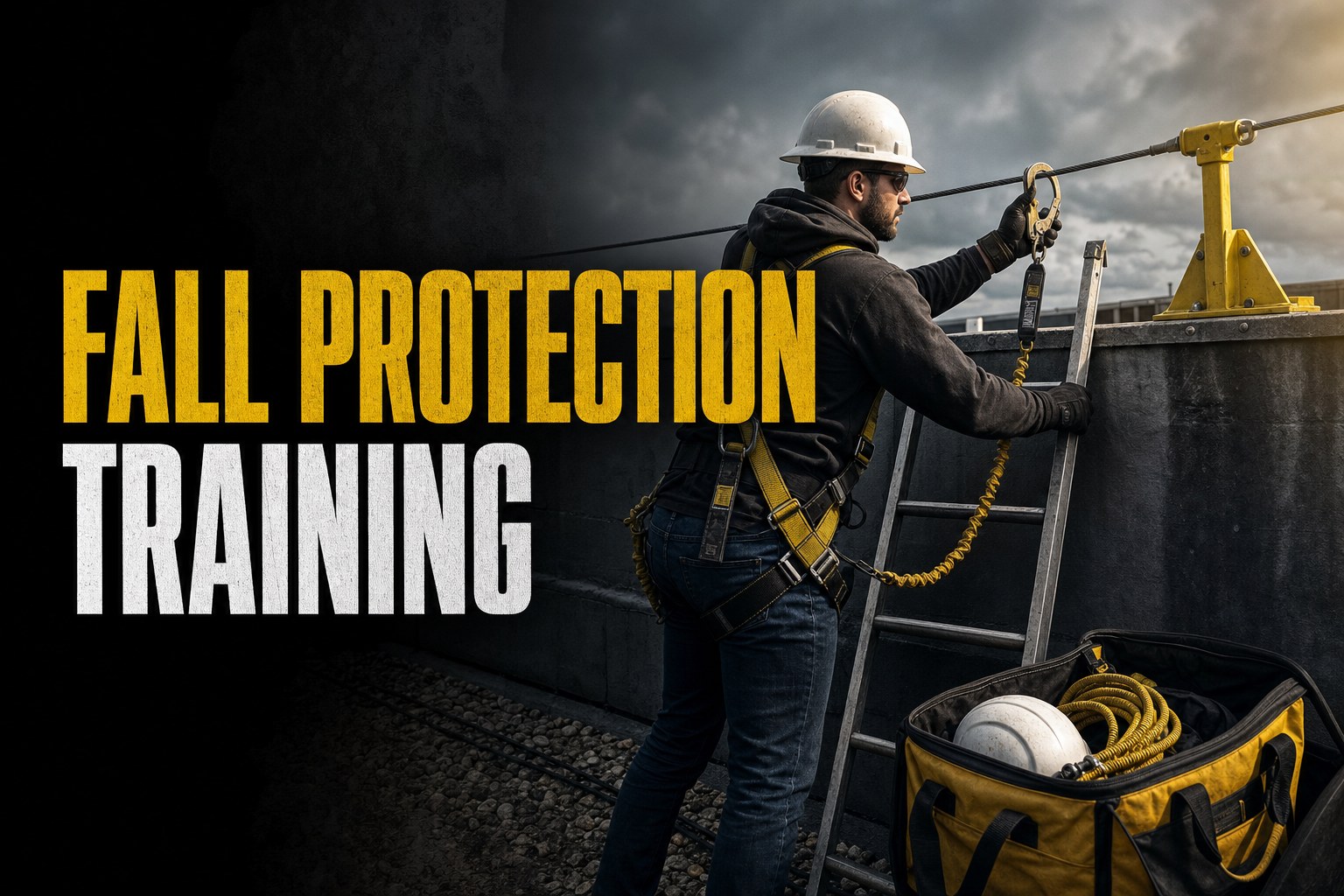
Fall Protection Training
$30 · ~30 min online · certificate issued same day · valid 2 years
Also read: Don't Wait: Complete Your OSHA Fall Protection Certification This Week Online · ANSI/TIA Tower Standards: Preparing Your Company for Compliance
- Competent Climber Certification — Verifies ability to safely ascend, descend, and position on tower structures
- RF Safety Awareness — Required by most major carriers including AT&T, Verizon, and T-Mobile
- Rescue and Suspension Trauma Training — Critical for compliance and emergency response capability
- Tower Technician Level 1 (NWSA TT1) — The National Wireless Safety Alliance credential increasingly required industry-wide
Safe Climbing Practices: A Quick-Reference Checklist
Experienced tower climbers develop habits that become second nature. If you're new to the industry, build these into your daily routine:
- ✅ Inspect all PPE before every climb — harness, lanyards, connectors, helmet
- ✅ Check weather conditions — wind above 25 mph, lightning within 10 miles = no climb
- ✅ Conduct a job hazard analysis (JHA) and review with your crew before starting
- ✅ Verify RF status — never climb an active sector without written clearance
- ✅ Establish communication protocol — how you'll stay in contact with ground crew
- ✅ Know your rescue plan — who does what if something goes wrong
- ✅ Document everything — site conditions, equipment checks, any incidents
Industry Outlook: Why 5G Skills Are in High Demand
According to the Wireless Estimator, the telecom tower industry is experiencing record levels of construction activity driven by 5G buildout, FirstNet expansion, and rural broadband initiatives under the BEAD program. The Bureau of Labor Statistics projects telecommunications line installer and repairer jobs to grow 4% through 2032, with specialized 5G technicians commanding significantly higher wages.
Average pay for certified tower climbers in 2025 ranges from $28 to $45 per hour, with experienced crew leads and foremen earning $60,000 to $90,000+ annually. Technicians with RF safety, fiber splicing, and 5G-specific training consistently earn at the top of that range.
The Bottom Line on 5G Tower Safety
Working on telecommunications infrastructure is one of the most demanding — and rewarding — careers in the construction trades. The 5G era brings new opportunities alongside new responsibilities. Safety knowledge isn't just about compliance; it's what separates professionals who build long careers from those who don't make it through their first year.
Investing in proper training before you climb isn't an expense — it's the foundation of your career.
Ready to Build a Career in Telecom Construction?
At Build Right Academy, we offer industry-recognized training programs designed specifically for the 5G era. Our courses cover OSHA compliance, RF safety, tower climbing fundamentals, and the hands-on skills that carriers and tower companies are hiring for right now.
👉 Browse our telecom construction courses and take the first step toward a certified, in-demand career in one of the fastest-growing trades in America.
Related Courses at BuildRight Academy
Get certified online — training built to OSHA standards for construction and telecom workers:
- RF Awareness, Safety, and Hazard Training
- Fall Protection For Construction
- Capstan Hoist Safety and Operations Training
Browse by category: