See the job
before you climb it.
What tower techs actually do, the structures you'll see, the real hazards, and the exact training path to get hired — free, no card, rotate a real 3D tower yourself.
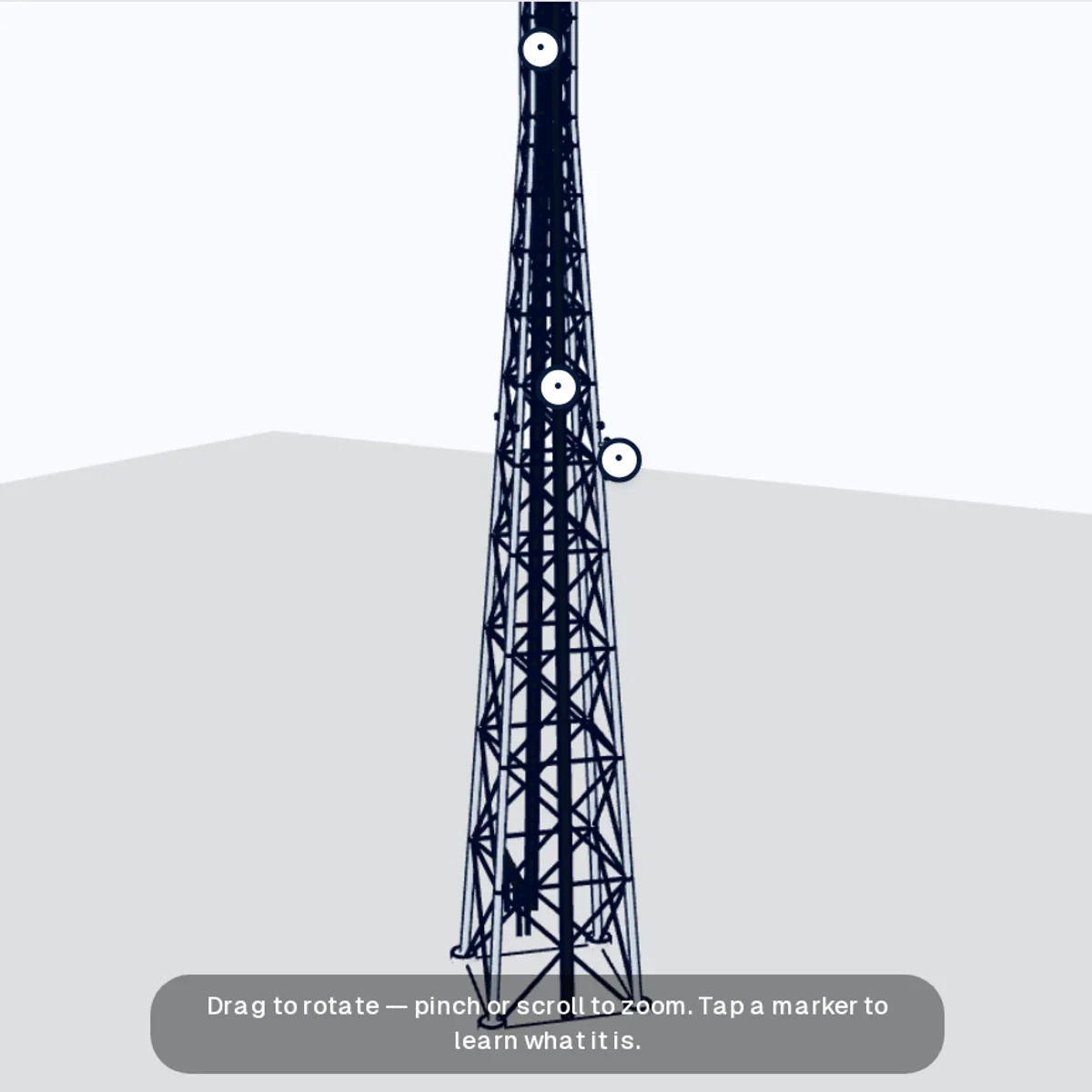
3D model
Self-support lattice tower
Every step exists for a reason.
Straight from the course: the order every real job runs in, start to finish.
- 1
Arrival
Crew shows up, gear and vehicle staged at the compound.
- 2
JSA / tailgate briefing
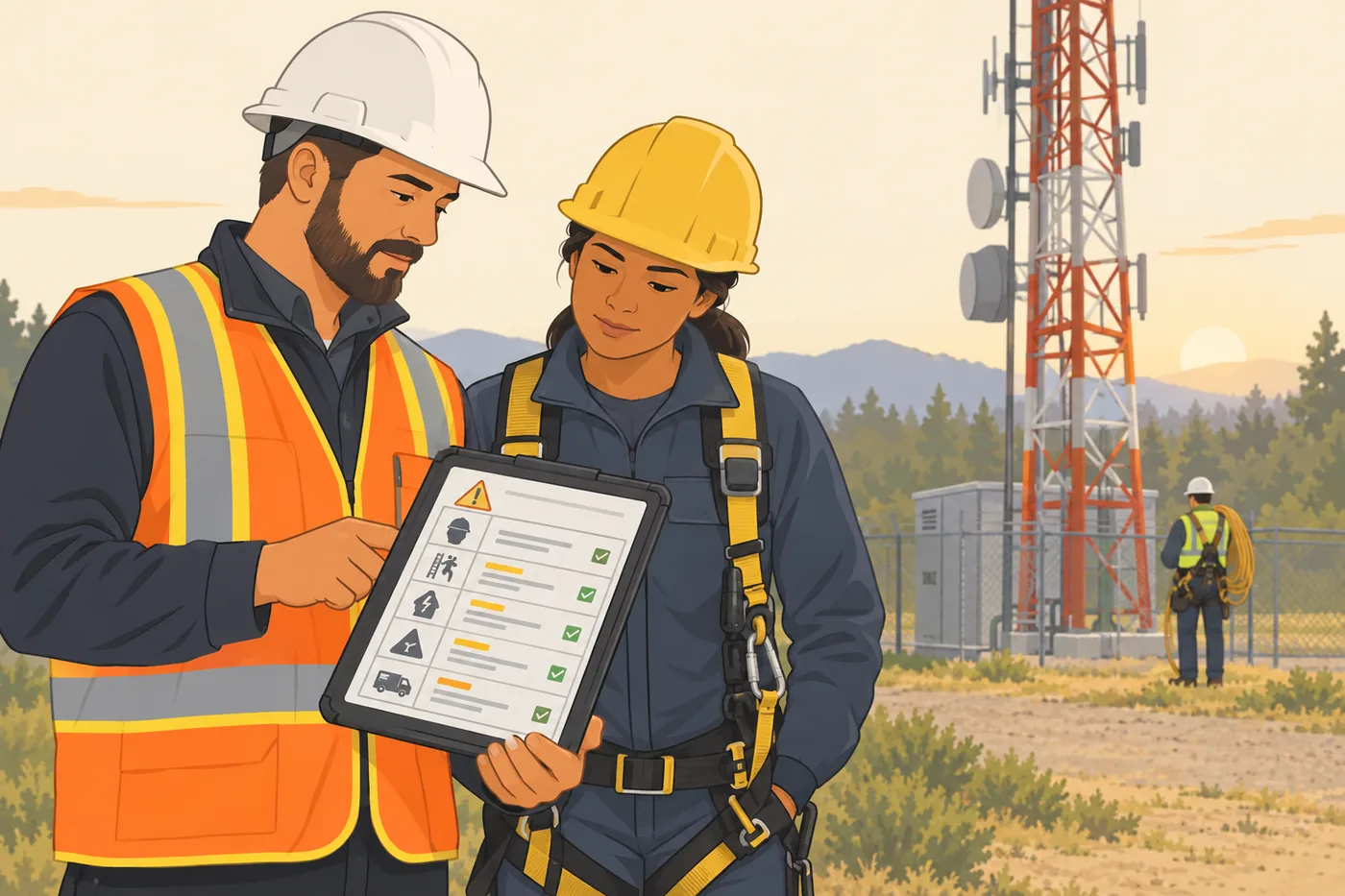
Work order, hazards, and controls reviewed and signed before anyone touches gear.
- 3
Gear inspection
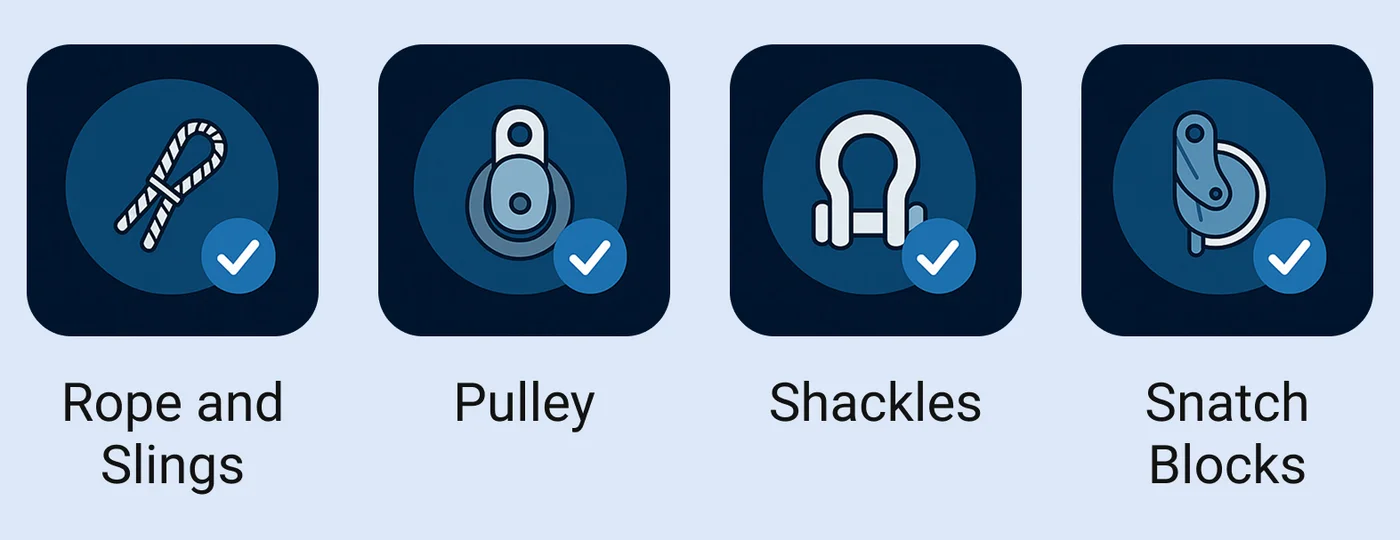
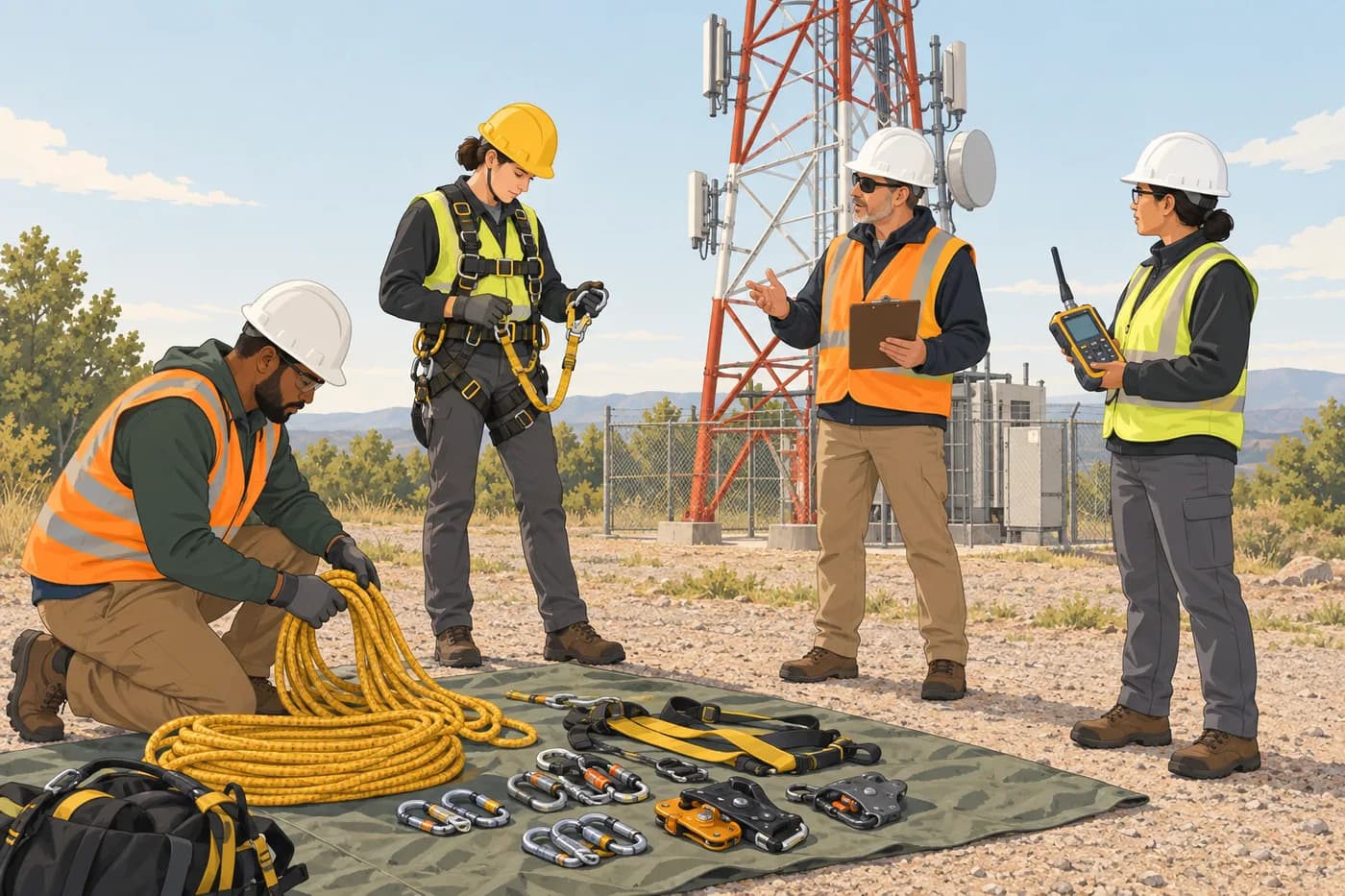
Harness, lanyards, rope, and rigging hardware checked before anything is used — every time.
- 4
Climb
100% tie-off the entire way up to the work location — see it on the 3D tower below.
- 5
Rigging & material up
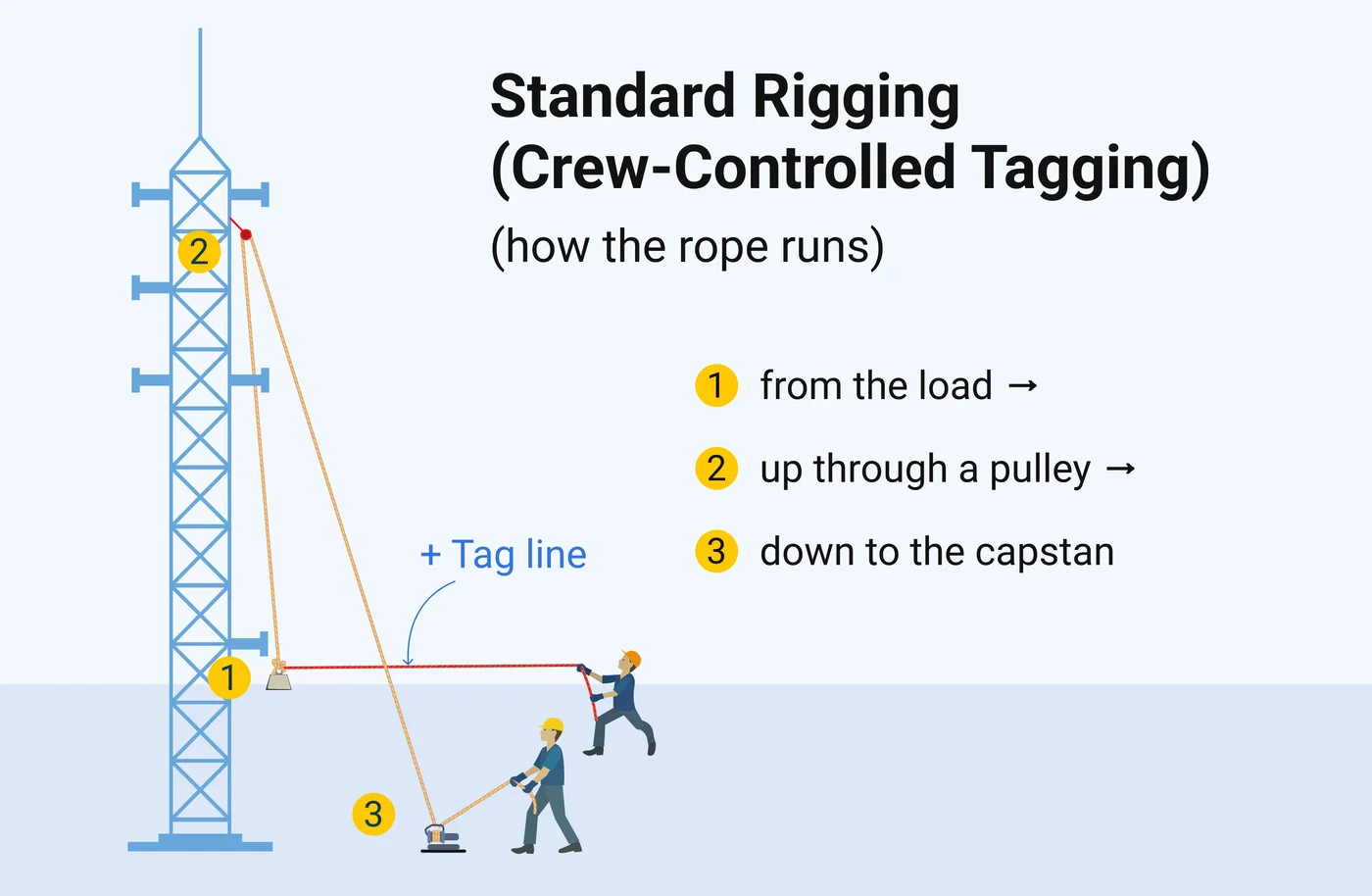
Ground crew rigs the load and sends it up on the load line, a tag line controlling it the whole way — see the rope path in the diagram a few sections down.
- 6
Work at height
Installing, torquing, weatherproofing, aligning — per the method of procedure.
- 7
Descent
Tools and scrap accounted for and lowered, work area checked.
- 8
Closeout
Photos, as-builts/redlines, and a site walk with the foreman before the crew leaves.
Rotate one yourself.
Drag, pinch, zoom — the same interactive 3D model the course uses. Switch structures with the tabs.
3D model
Rotate and zoom
Loading the 3D model…
- Three or four steel legs, wider at the base, braced by diagonal members — no guy wires.
- Often the tallest structures you’ll climb, 200 ft and up.
- Climbed up one leg or a dedicated climbing face, on a fixed safety-climb cable.
Up top. On the ground. At the base.
Climber(s), sometimes an RF tech
Up top
Installing and torquing antennas and RRUs, running and weatherproofing cable, alignment — plumb, azimuth, downtilt. Every bolt is torqued to a spec, never by feel. Climbers stay 100% tied off the whole way up.
Ground hand(s)
On the ground
Staging and prepping gear, rigging the load, tag-line work, holding the drop zone, radio relay to the climbers. The usual first job on a crew — no climb authorization required to start.
Fiber/line tech, electrician, foreman
At the base
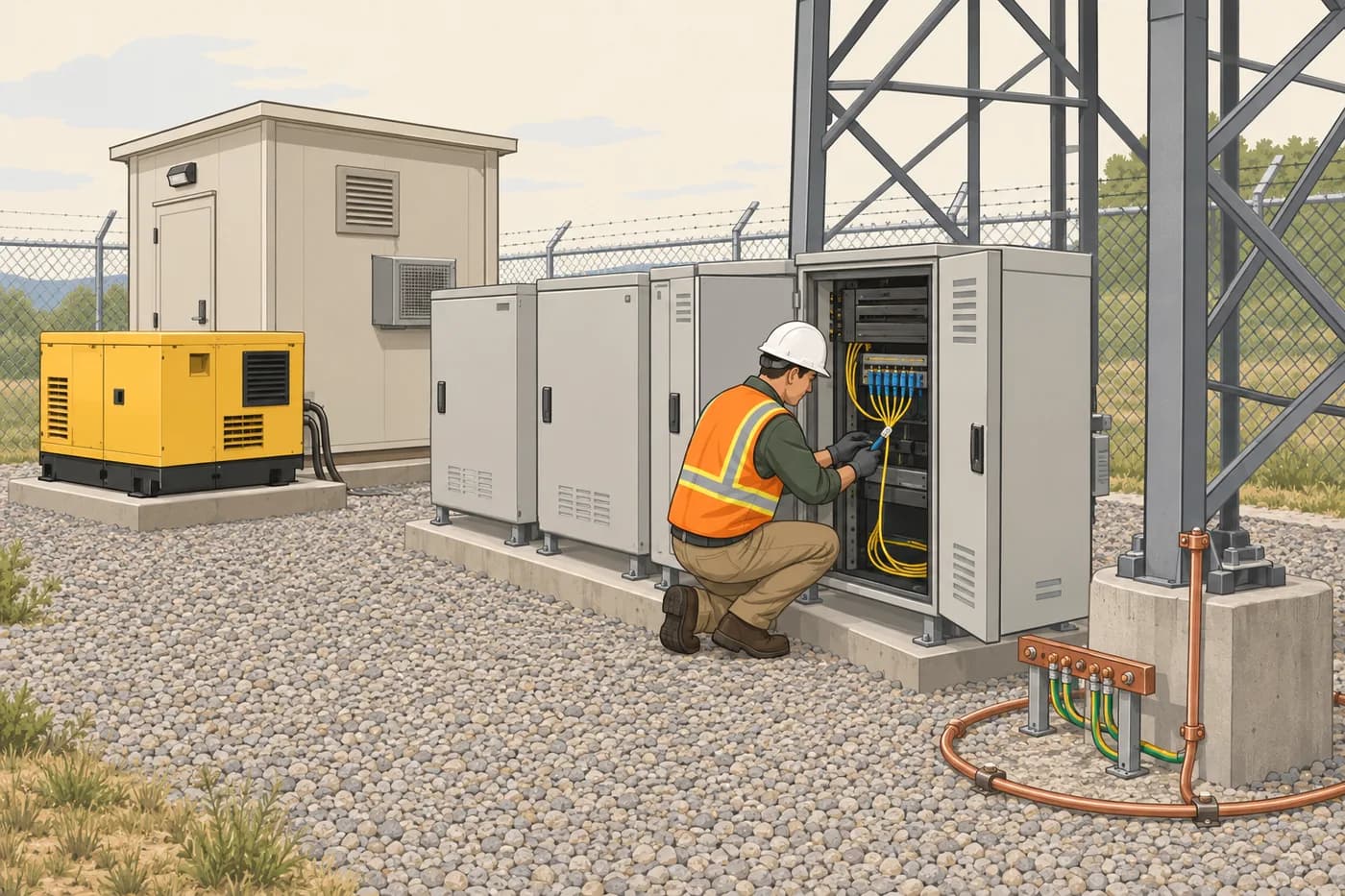
Cabinet and power connections, grounding/bonding, fiber termination, labeling. Electrical work follows lockout/tagout — done only by a qualified electrician.
Falls, RF, rigging, weather. Real patterns, not scare copy.
These short films are dramatized scenarios built around failure patterns that show up repeatedly in real OSHA and NIOSH incident data — not a single named case. The course covers falls, dropped objects, RF exposure, electrical, rigging, and weather/heat/cold in full.
Inspect Before Use
RF — the Heat You Can’t See
Zero to hireable, in order.
- $35Step 1
Authorized Climber / Fall Protection
The one card you cannot start climbing without.
- $49Step 2
RF Awareness
Exposure zones, MPE limits, reading the signage carriers post.
- $40Step 3
First Aid / CPR
The response skills every crew wants on site.
- Step 4
OSHA 10
From an OSHA-authorized provider — not something any online course, including this one, can issue.
- $40Step 5
PPE for the Job
Telecom-specific gear: fit, inspect, and actually use it.
- $95Step 6
Rigging
Sling angle, hardware inspection, the rigging plan on a communication structure.
- $120Step 7
TTT-1, then TTT-2
TTT-1 is the broad knowledge base contractors look for; TTT-2 is the next step once you’re climbing.
Tower Crew Essentials
Capstan hoist, rigging, RF awareness, and PPE — the fastest way through most of the path above. Add fall protection and first aid/CPR individually alongside it to cover the whole list.
$219
8 modules, free, about 2 hours.
22 lessons Certificate of completion No experience needed
- 0Welcome: What Tower Work Really Is1 lesson
- 1What Tower Techs Do3 lessons
- 2Tower Types You'll See6 lessons
- 3What's Actually on the Tower1 lesson
- 4How the Work Actually Happens on a Site5 lessons
- 5Hazards You'll Face3 lessons
- 6How You Get Hired: The Training Path1 lesson
- 7Self-Check and Completion2 lessons
Questions first?
Is this actually free?+
Yes. No card, no trial that converts to a charge, no catch — the course is $0 and stays that way. It’s a lead magnet, not a discounted upsell.
Do I need experience to take it?+
No. It’s built for people who have never been on a tower site — career-changers, people coming out of general construction or the military, trade-school students. Nothing here assumes you already know the terms.
Will this course get me hired?+
Honestly — not by itself. This course shows you what the job actually is and exactly which real, paid certifications a contractor looks for. It doesn’t issue those certifications itself. Getting hired takes the training path in the last module: fall protection, RF, first aid, PPE, rigging, and TTT-1 at minimum.
How long does it take?+
About an hour, self-paced — short modules with a quick self-check at the end, not a proctored exam. You get a certificate of completion when you finish.
Is it available in Spanish or Russian?+
Not yet — this course is English only for now, even though many of our paid courses are also offered in Spanish and Russian.
What does a tower climber actually earn?+
We’re not going to hand you a made-up number — pay varies a lot by contractor, region, and how far along the training path you are. The U.S. Bureau of Labor Statistics tracks the closest official category, Telecommunications Line Installers and Repairers (SOC 49-9052), in its Occupational Employment and Wage Statistics program. Check the current numbers there before trusting a figure in any training video, ours included.
See the job. Then decide.
Free, self-paced, certificate at the end — no card, no catch.