Not yet. OSHA's proposed heat rule — "Heat Injury and Illness Prevention in Outdoor and Indoor Work Settings" — has been through public comment and hearings but is still not final. Until it is, heat illness prevention is enforced through OSHA's General Duty Clause, NIOSH guidance, and whatever state-specific heat standard applies where the work is happening.
That gap surprises a lot of people, because heat kills workers every year and the industry talks about "OSHA heat rules" like they already exist. They don't — not as one federal standard with a number attached. Here's what's actually in place right now, and what's coming.
Where the federal rule actually stands
OSHA published the proposed rule for comment on August 30, 2024. An informal public hearing on it concluded July 2, 2025, and the post-hearing comment period closed October 30, 2025. As of today, OSHA has not issued a final rule. Rulemaking at this stage can still take months to move from "hearings closed" to "published in the Federal Register as final" — and a final rule typically includes a compliance runway before enforcement starts, so even a final rule wouldn't mean instant nationwide requirements.
Until that happens, there is no single OSHA regulation titled "heat stress" that sets a trigger temperature, a mandatory water schedule, or a required rest-break interval nationwide.
What actually applies today
Three things fill the gap left by no final federal standard:
- The General Duty Clause. Section 5(a)(1) of the OSH Act requires every employer to provide a workplace free of recognized hazards likely to cause death or serious harm. Heat stress is a well-documented, recognized hazard — OSHA has cited and fined employers under the General Duty Clause for heat illness for years, without needing a heat-specific standard to do it.
- NIOSH guidance. The National Institute for Occupational Safety and Health publishes heat-index-based recommendations for water, rest, and shade. It isn't a legally binding OSHA standard, but it's the technical basis most employer heat-safety programs — and most OSHA General Duty Clause citations — actually point to.
- State-specific standards. A handful of states, including California, Oregon, Washington, and Colorado, have their own binding heat-illness-prevention standards with their own numeric triggers. Where one of these applies, it's enforced on top of (not instead of) general federal obligations.
"No OSHA number" doesn't mean "no legal risk"
This is the part that catches employers off guard. "OSHA doesn't have a heat standard" gets heard as "OSHA can't cite me for heat," and that's wrong. A General Duty Clause citation doesn't need a specific numeric trigger — it needs proof that heat was a recognized hazard on that job, that feasible controls existed, and that the employer didn't use them. A worker going down with heat stroke on a day the forecast predicted dangerous heat is exactly the kind of case that supports a citation.
Heat stress training exists for the same reason the citation risk exists: "nobody told them the signs" and "nobody had a plan" are the two gaps that turn a hot day into an incident report.
What a reasonable heat-safety program looks like in practice
Without a federal number to comply with, "reasonable" is judged against what NIOSH recommends and what the rest of the industry already does. In practice that means:
Recommended certification
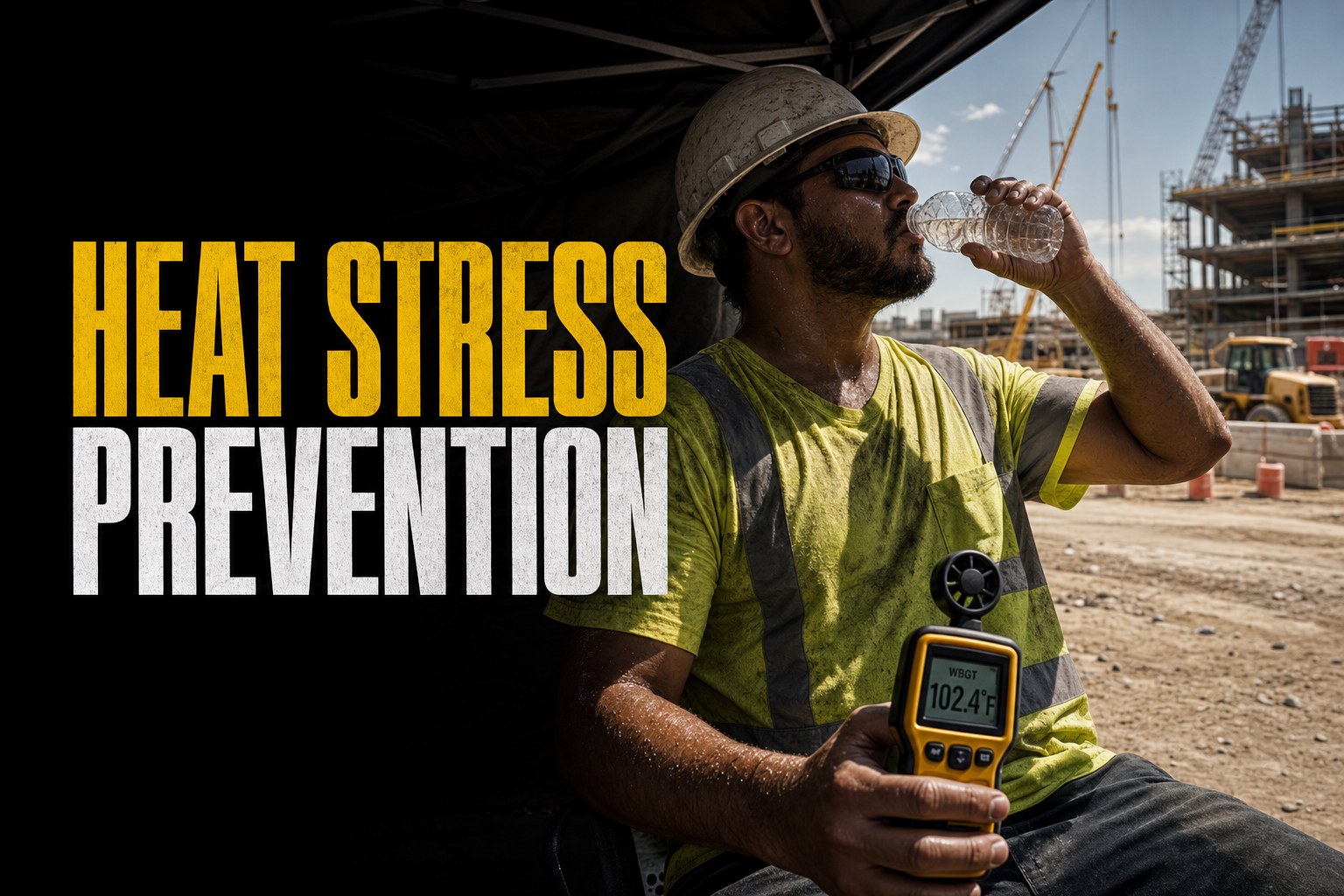
Heat Stress Prevention
$30 · ~1h online · certificate issued same day · valid 2 years
Also read: ANSI/TIA Tower Standards: Preparing Your Company for Compliance · AI-Powered Drone Tower Inspections: Threat or Opportunity for Certified Climbers
A short, focused course on heat stress prevention covers hydration and shade scheduling, acclimatization, warning signs, and emergency response in about an hour online — the exact pieces a General Duty Clause defense actually needs on record. It's $30, self-paced, with a certificate of completion issued the same day and valid for two years.
There is no OSHA number for heat — there is still an OSHA citation for ignoring it.
Crews working through winter conditions face the mirror-image problem: no federal cold standard either, but the same General Duty Clause exposure. The cold stress prevention course covers that side.
Frequently Asked Questions
Q: Is OSHA's heat rule final yet?
No. The proposed rule went through comment and hearings in 2024–2025, with the post-hearing comment period closing October 30, 2025, but no final rule has been published as of today.
Q: If there's no heat standard, can OSHA still fine my company for a heat illness incident?
Yes. OSHA regularly cites employers under the General Duty Clause (Section 5(a)(1) of the OSH Act) for heat illness, using NIOSH guidance and industry practice as the basis for what a "recognized hazard" and a "feasible control" look like.
Q: Does my state have its own heat rule?
Some do — California, Oregon, Washington, and Colorado are among the states with their own binding heat-illness-prevention standards. Check your state OSHA-equivalent agency directly, since requirements and numeric triggers vary by state.
Q: What temperature does OSHA say is too hot to work?
OSHA itself doesn't set one. NIOSH's heat-index guidance is the commonly used reference instead, and most employer heat-safety programs are built around it rather than a specific OSHA number.
Q: What should a basic jobsite heat-safety plan include?
Accessible water, scheduled rest and shade (not just available-if-needed), an acclimatization period for new or returning workers, supervisor monitoring for early warning signs, and a written plan everyone on the crew has actually seen.
Q: Is this course accepted by employers?
Yes — it's built to OSHA-aligned heat-safety practices and accepted by construction and telecom employers nationwide, with a certificate of completion that verifies online by its own code.