GHS Pictogram Trainer
On a drum in a yard nobody reads the Safety Data Sheet first — they read the diamond. Nine symbols, shuffled every run: name the hazard, then see what it covers and what it changes about how you work.
Read the label
Name the hazard
Questions crews ask
How many GHS pictograms are there, and how many does OSHA require?
Nine exist under the UN GHS. Eight are required by the OSHA Hazard Communication Standard, 29 CFR 1910.1200 Appendix C: exploding bomb, flame, flame over circle, gas cylinder, corrosion, skull and crossbones, exclamation mark and health hazard. The ninth — the environment pictogram, for aquatic toxicity — is not required by HazCom, but suppliers print it because they label to the UN system, so you will meet it on real containers.
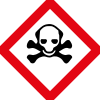
What is the difference between the skull and crossbones and the exclamation mark?
Severity. The skull covers acute toxicity in the severe categories — fatal or toxic. The exclamation mark covers the lesser end: harmful acute toxicity, skin and eye irritation, skin sensitisation, narcotic effects, respiratory irritation. They are not interchangeable, and the exclamation mark is the one people wave off — but skin sensitisation means one careless exposure can leave you reacting to that substance for the rest of your career.
Why does the health hazard pictogram matter if nothing happens when I use the product?
Because nothing happening is the point. That pictogram covers carcinogens, mutagens, reproductive toxicity, respiratory sensitisation, target organ toxicity and aspiration hazard — harm that shows up years later and gives no warning at the time. Exposure controls and any medical surveillance in your program are the whole defence; how you feel after the shift tells you nothing about the dose.
The flame over circle looks like the flame. What is the difference?
The flame is the substance that burns. The flame over a circle is an oxidiser, which may not burn at all — it supplies oxygen and makes everything around it burn hotter and faster. That is why it is a storage question more than a handling question: an oxidiser next to fuel, solvent, rags or grease turns a small ignition into one you cannot control.
Does knowing the pictograms cover my HazCom training requirement?
No. 1910.1200(h) requires training on the hazardous chemicals in your work area — the labels and Safety Data Sheets, the physical and health hazards present, the protective measures, and the details of your employer’s written program. Recognising the nine symbols is the part you can drill on a phone; the rest is specific to the chemicals in your yard and has to come from your employer.
Take it past the drill
The drill is recognition practice, not HazCom training. 29 CFR 1910.1200(h) requires training on the specific chemicals in your work area, delivered by your employer. Pictogram scope follows Appendix C of that standard; the environment pictogram is shown because suppliers use it, and is marked as not required by HazCom.