Frostbite starts as numbness and white or waxy-looking skin on exposed areas — fingers, toes, nose, and ears. Hypothermia starts as uncontrollable shivering with confusion or slurred speech. A crew member who stops shivering in the cold is a worse sign, not a better one — it means the body is losing the fight, and it's a medical emergency. Both conditions need warming, dry clothing, and medical attention, and severe cases need 911 immediately.
Frostbite: what it looks and feels like at each stage
Frostbite progresses in recognizable stages, and catching it in the first stage is the difference between a quick recovery and lasting tissue damage.
Early stage — numbness, tingling, or a stinging sensation in exposed skin, usually fingers, toes, nose, or ears first. The skin may look red or slightly pale. This is the moment to act, while it's still easy to reverse.
Progressing — the skin turns white, grayish-yellow, or takes on a waxy appearance. It feels unusually firm or numb to the touch, and the person may not even notice how affected the area has become, since numbness masks the sensation of damage happening.
Severe — the skin becomes hard to the touch, may blister, and the damage reaches deeper tissue. At this stage it's no longer a field-treatable issue — it needs medical attention.
Hypothermia: what it looks like at each stage
Hypothermia also moves through stages, and the warning signs change in a way that can fool people into thinking someone is "getting better" when they're actually getting worse.
Early stage — uncontrollable shivering, along with clumsiness or fumbling with hands, and slurred speech. The person is often still alert enough to describe how cold they feel.
Worsening — increasing confusion and drowsiness. The person may seem "out of it," make poor decisions, or stop responding normally to questions.
Severe — here's the counterintuitive and dangerous part: shivering can actually stop. That is not a sign of recovery — it's a sign the body has lost the ability to keep generating heat through shivering, and it often comes with worsening confusion or loss of consciousness. Severe hypothermia is a medical emergency.
| Stage | Frostbite signs | Hypothermia signs |
| --- | --- | --- |
| Early | Numbness, tingling, stinging | Shivering, clumsiness, slurred speech |
| Progressing | White/waxy/firm skin | Confusion, drowsiness |
| Severe | Hard, blistered skin | Shivering stops, possible loss of consciousness |
What NOT to do
A few instinctive reactions actually make both conditions worse, and every crew member should know to avoid them:
- Don't rub or massage frostbitten skin. It feels like it should help circulation, but it can cause additional tissue damage to skin that's already compromised.
- Don't apply direct high heat (a heater, hot water, a vehicle exhaust vent) to frostbitten or hypothermic skin. Rapid, uneven rewarming can injure tissue further than the cold already has.
- Don't give alcohol to someone who's hypothermic. It feels warming but actually accelerates heat loss and impairs the body's ability to respond.
What TO do on site before help arrives
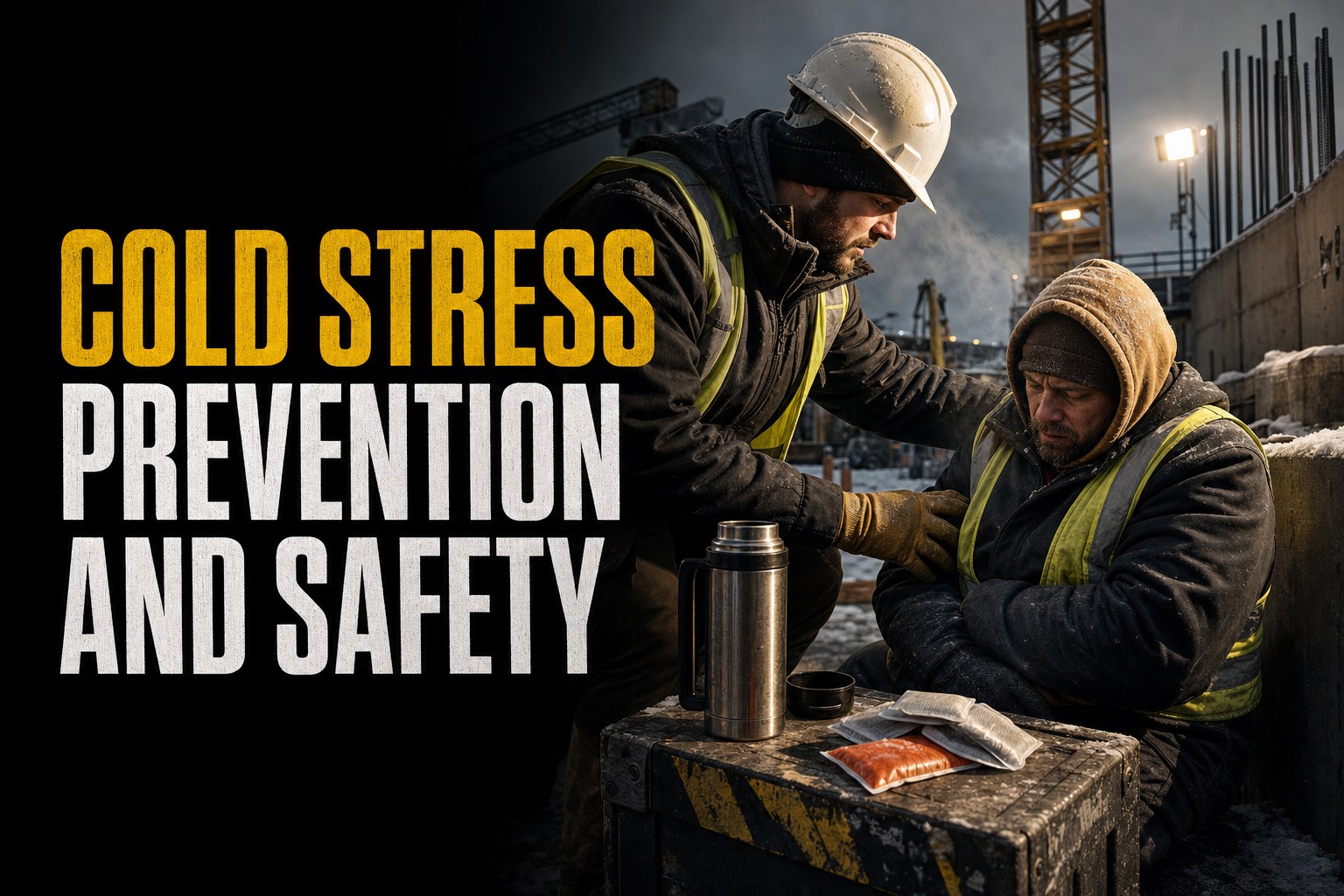
Recommended certification
Cold Stress Prevention and Safety
$35 · ~1h online · certificate issued same day · valid 2 years
Also read: ANSI/TIA Tower Standards: Preparing Your Company for Compliance · AI-Powered Drone Tower Inspections: Threat or Opportunity for Certified Climbers
The right response is deliberately simple, which is part of why it works under pressure:
Even when 911 is the right call, these steps in the minutes before help arrives genuinely change outcomes — they're the difference between a recoverable injury and a lasting one.
Why catching it early matters
Both frostbite and hypothermia are far easier to reverse caught in their earliest stage than once they progress. Early-stage numbness and tingling, or early shivering with clumsiness, respond well to getting warm, dry, and out of the wind. Once skin turns hard and waxy, or shivering stops and confusion sets in, the situation has moved from "manage it on site" to "medical emergency," and the margin for error narrows fast.
That's exactly why recognition training matters as much as the gear itself — a crew that can spot the early signs in each other, not just in themselves, catches these conditions while they're still reversible. Our Cold Stress Prevention and Safety training covers this recognition in detail alongside broader cold-weather planning, in about an hour online, with a certificate of completion valid for two years.
For tower crews, linework, and winter concrete work in particular, where hands and extremities take the brunt of exposure and elevated work depends on coordination and judgment, this recognition training through Cold Stress Prevention and Safety is a direct safety investment, not a box to check.
A crew member who stops shivering in the cold is getting worse, not better.
Frequently Asked Questions
Q: What's the very first sign of frostbite?
Numbness, tingling, or a stinging feeling in exposed skin — usually fingers, toes, nose, or ears first. This is the stage to act on, before the skin turns white or waxy.
Q: Why is it dangerous when someone stops shivering in the cold?
Shivering is the body's way of generating heat. When it stops during continued cold exposure, it usually means the body has lost that ability, not that the person is warming up. It's often paired with worsening confusion and is a medical emergency.
Q: Should I rub a frostbitten area to warm it up?
No. Rubbing or massaging frostbitten skin can cause additional tissue damage. Warm the person gradually and get medical attention instead, especially if the skin looks hard, waxy, or blistered.
Q: Is it okay to give someone warm alcohol to help with hypothermia?
No. Alcohol accelerates heat loss and impairs the body's ability to respond to cold, even though it can feel warming in the moment. Warm, non-alcoholic drinks are appropriate only if the person is alert enough to swallow safely.
Q: When should I call 911 instead of just warming someone up?
Call 911 immediately for confusion, loss of consciousness, or any sign of severe hypothermia, and for frostbite that looks severe — hard, waxy, or blistered skin. Early-stage symptoms can often be managed on site, but once symptoms reach that point, it's a medical emergency.
Q: Can frostbite happen without the person noticing?
Yes, and that's part of what makes it dangerous. Numbness masks the sensation of the skin being affected, so a crew member might not notice how far it's progressed without someone else checking on them — which is exactly why a buddy system matters in cold conditions.