OSHA requires a protective system in any excavation 5 feet (1.5 m) deep or more, unless it is cut entirely in stable rock (29 CFR 1926.652(a)(1)). Under 5 feet you can skip it only if a competent person examines the ground and finds no potential for a cave-in. Ladders or ramps are required from 4 feet deep, and the competent person has to inspect before work starts and as needed through the shift.
The full rules are in OSHA's Subpart P. The Excavation and Trenching Safety course covers all of this in about 3.5 hours for $35, online, with a certificate of completion.
The depth rules in one place
| Depth | What the standard says | Where |
|---|---|---|
| Under 5 ft | No protective system only if a competent person finds no cave-in potential | 1926.652(a)(1)(ii) |
| 4 ft or more | Safe way out (ladder, stairway, ramp) so that no worker has more than 25 ft of lateral travel | 1926.651(c)(2) |
| More than 4 ft | Test the air before entry where oxygen deficiency or a hazardous atmosphere could reasonably exist | 1926.651(g)(1)(i) |
| 5 ft or more | Sloping, benching, shoring or a trench shield, unless stable rock | 1926.652(a)(1), (b), (c) |
Your four choices for protection
- Slope or bench the walls. The simplest fixed option is a slope no steeper than 1.5 horizontal to 1 vertical (about 34 degrees), which is the Type C soil figure; stronger soil allows steeper cuts, using the OSHA appendices.
- Shore the walls with timber or hydraulic supports.
- Shield the workers with a trench box.
- A design by a registered professional engineer, which is required for the specially designed systems.
The soil decides which slope or system is allowed, and the competent person classifies it on site.
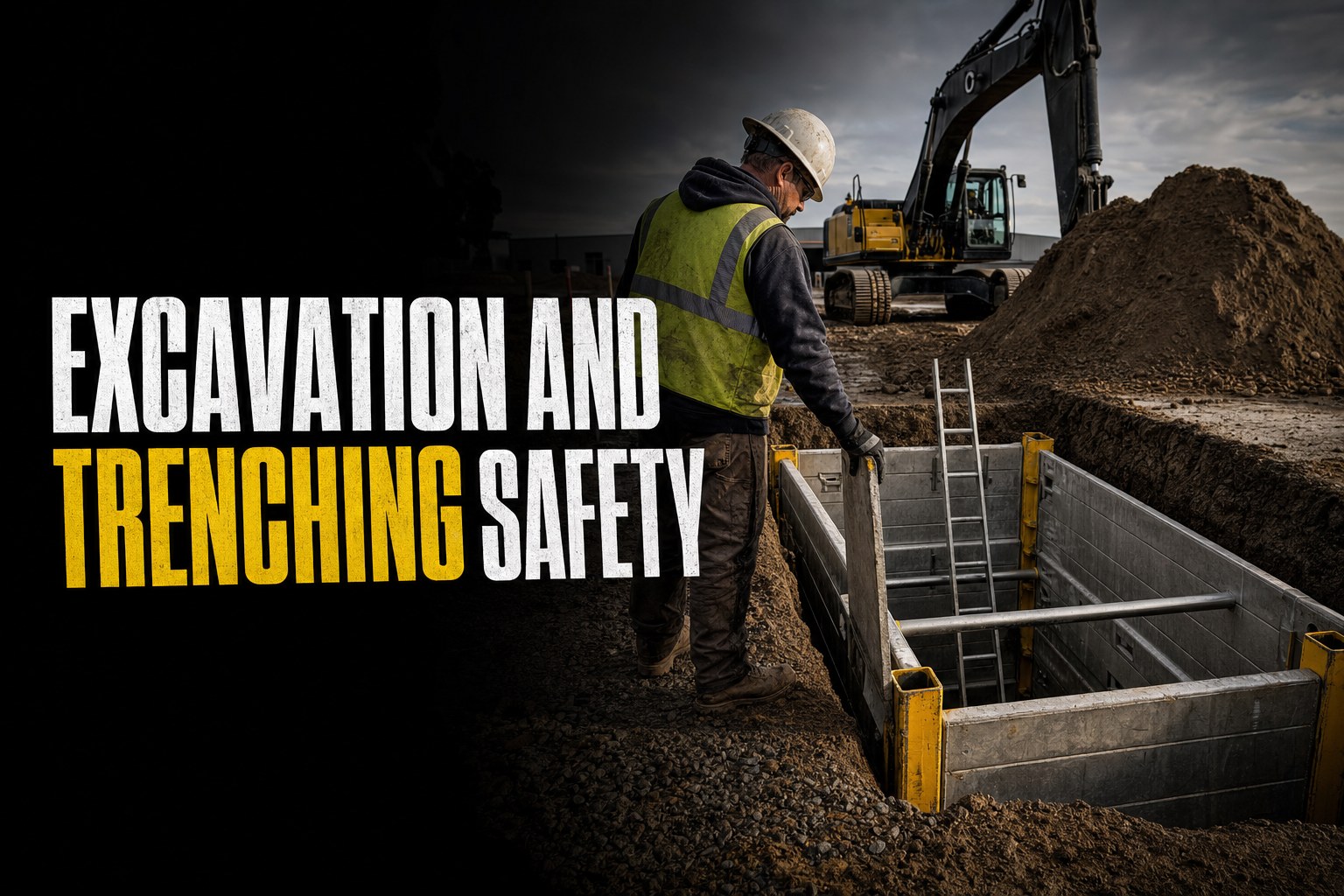
Recommended certification
Excavation and Trenching Safety
$35 · ~3.5h online · certificate issued same day · valid 2 years
Also read: ANSI/TIA Tower Standards: Preparing Your Company for Compliance · AI-Powered Drone Tower Inspections: Threat or Opportunity for Certified Climbers
What the competent person must do
OSHA's definition is someone who can identify existing and predictable hazards and has authority to stop work and fix them. In an excavation that means:
The mistakes that get people killed
OSHA says trench collapse is the greatest risk to workers in this work. Typical failures are a crew working in a 6-foot cut with no box, a shield that stops well short of the bottom of the cut, and a spoil pile at the edge. A trench box protects the person inside it; it does not hold the wall back, so do not work outside it.
Quick answers
At what depth does OSHA require trench protection? At 5 feet or deeper, unless the trench is entirely in stable rock. Under 5 feet a competent person must find no cave-in potential.
When is a ladder required in a trench? From 4 feet deep. A ladder, stairway or ramp must be within 25 feet of lateral travel for workers.
How far from the edge must dirt be piled? At least 2 feet.
Who is a competent person for trenching? Someone who can identify existing and predictable hazards and has authority to stop the work. They inspect before work starts and as needed during the shift.
Do I need to test the air in a trench? Yes, before entry deeper than 4 feet when oxygen deficiency or a hazardous atmosphere could reasonably exist.
Sources: OSHA 29 CFR 1926.651, 1926.652, OSHA trenching and excavation. Free poster: trenching and excavation; free toolbox talk.