Grounding gives electrical current — from a lightning strike or a fault — an intentional, low-resistance path to earth. Bonding connects metal parts of a system together so they stay at the same electrical potential, preventing dangerous voltage differences between them even before current ever reaches the ground. A telecom site needs both, and they're connected but not the same system: grounding gets current out of the structure; bonding keeps everything along the way from becoming a shock or arc hazard in the process.
The terms get used interchangeably on job sites constantly — "ground that cable" often really means "bond it" — and the distinction matters because a site can have a technically functional ground system and still have a dangerous bonding gap, or vice versa.
Why a Telecom Site Grounds at All
Lightning and the physics of a ground path
A tower is often the tallest object for a wide radius, which makes it a natural lightning attachment point. Grounding gives that strike energy a defined path to earth instead of an unpredictable one through whatever metal or equipment happens to be in the way.
Fault current and RF performance
A proper ground system also protects equipment from electrical faults and contributes to RF performance — a poorly grounded antenna system can actually perform worse, not just be less safe.
Personnel safety: touch and step potential
This is the piece most people miss. During a fault or a strike, the ground near the tower base can carry a voltage gradient — step potential between two feet, or touch potential between a hand on equipment and the ground — that can injure someone standing nearby even if they never touch the tower itself.
Recommended certification
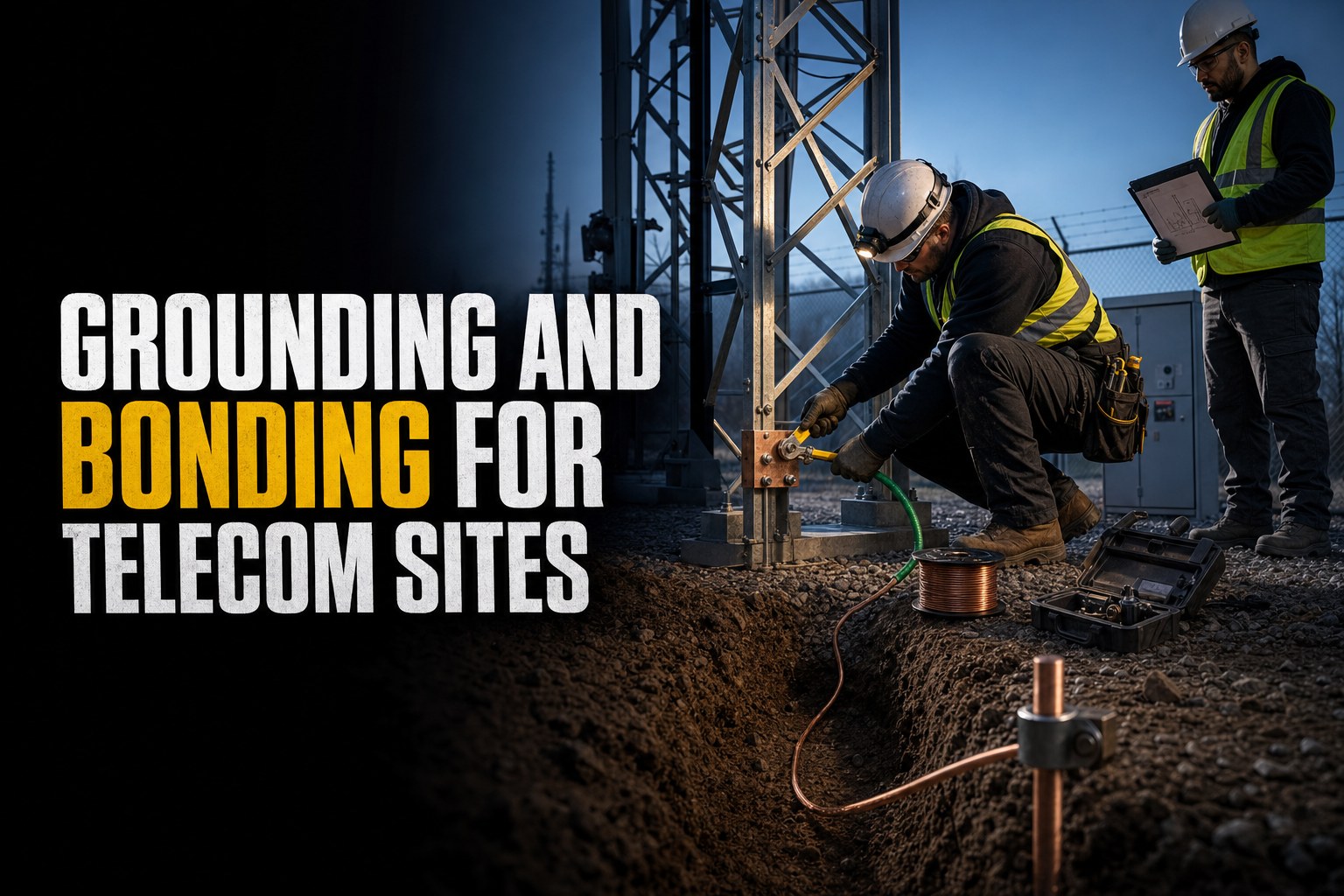
Grounding & Bonding for Telecom Sites
$89 · ~4h online · certificate issued same day · valid 2 years
Also read: Detroit Cell Site Battle: Why Clear Easements Matter for Tower Crews · Westlake, TX Cell Tower Battle: Federal Order vs. Local Appeal
The Site Grounding System
A telecom site's ground system is built from a ground ring, ground rods and radials around the tower base, with bonds running to the tower legs themselves, the fence, and the gate. An ice bridge, shelter halo and master ground bar (MGB) tie the shelter and its equipment into the same system, and dedicated ground bars at the top and bottom of the tower give coax, fiber and antenna grounding kits a defined connection point.
Where Bonding Shows Up Equipment by Equipment
Every coax or hybrid cable run needs grounding kits at entry, top and bottom of the run — these are bonding connections that tie the cable's shield to the ground system at multiple points along its length, not just once. RRUs (remote radio units) bond at the radio itself, and DC power systems have their own grounding requirements separate from the RF cabling.
Making the Connection Correctly
How a bond or ground connection is actually made matters as much as whether it exists. Exothermic welds create a permanent molecular bond and are generally preferred for critical connections, while compression lugs are mechanical connections used where a weld isn't practical — both have a place, but they're not interchangeable for every application. Two-hole lugs resist loosening better than single-hole, anti-oxidant compound prevents corrosion at the connection point, and the routing of the ground conductor itself matters: no sharp bends, and current should generally flow down and out, never doubling back.
Bonding the Antenna System and Checking the Work
Antennas and mounts need their own bonding back to the tower structure, and the finished work gets inspected for common defects — loose connections, missing anti-oxidant, improperly routed conductors — before the site is considered complete. Ground resistance testing (fall-of-potential or clamp-on methods) verifies the ground system is actually performing to spec, not just installed correctly on paper.
What the Course Covers
BuildRight's Grounding & Bonding for Telecom Sites course ($89, about 4 hours) walks through all of it in order: why sites are grounded (lightning physics, fault current, RF performance and personnel safety), the site grounding system itself (ring, rods, radials, tower and fence bonds, MGB), grounding coax, feeder, RRU and DC power, making the connection correctly (exothermic welds vs. compression lugs, conductor routing), bonding the antenna system and inspecting the work, and the documentation and standards that govern closeout. This is training with a certificate of completion — it does not make anyone an electrician, and it doesn't replace an electrician's license where one is required for the work.
This course is currently in final review before publication and isn't open for enrollment yet. It pairs naturally with rigging training for crews doing full tower build-outs, where antenna installation and grounding happen in the same work sequence.
Frequently Asked Questions
What's the actual difference between grounding and bonding?
Grounding connects a system to earth, giving fault or lightning current a defined path out. Bonding connects metal parts to each other so they share the same electrical potential, preventing dangerous voltage differences between components. Both matter, and they work together, but they're not the same thing.
Why does a telecom tower need grounding if it's not carrying high voltage?
Towers are often the tallest structure in the area, making them a natural lightning attachment point, and they also need protection from electrical faults in on-site equipment. Grounding addresses both, plus it affects RF system performance.
What is a Master Ground Bar (MGB)?
It's the central connection point that ties a telecom shelter and its equipment into the site's overall grounding system, usually located where cables and power enter the shelter.
Is an exothermic weld always better than a compression lug for ground connections?
Exothermic welds create a permanent molecular bond and are often preferred for critical, permanent connections, but compression lugs are a legitimate mechanical connection method used where welding isn't practical. The right choice depends on the specific connection and site requirements.
Does completing this course qualify someone as an electrician?
No. This is training with a certificate of completion focused on telecom site grounding and bonding practices — it is not an electrician's license and doesn't replace one where licensed electrical work is required.