I've spent over 12 years in telecom and construction. I've watched skilled workers plateau in their earnings, lose opportunities to certified competitors, and face sudden job termination because they lacked proper credentials. I've also seen the opposite: workers who invested just one day in MEWP certification online immediately commanded higher rates, gained access to premium projects, and built sustainable six-figure careers.
This isn't coincidence. It's economics.
If you operate mobile elevated work platforms (MEWPs) without formal certification, you're leaving between $15,000 and $35,000 annually on the table. More critically, you're exposed to regulatory liability, insurance exclusions, and accelerating industry displacement. The market is shifting. Certification isn't a nice-to-have anymore—it's the threshold requirement for employment on serious commercial projects.
This guide explains why getting certified today protects your career tomorrow, and why the 24-hour online format matters more than you think.
The Economic Reality: What Certification Actually Means to Your Paycheck
Let's start with numbers, because they're compelling.
According to the Bureau of Labor Statistics and construction wage data from 2023–2024:
- Non-certified MEWP operators: $38,000–$48,000 annually (entry-level to intermediate)
- Certified MEWP operators: $52,000–$68,000 annually
- Certified operators on specialized projects (telecom, industrial): $65,000–$85,000+ annually
That's a $14,000 to $37,000 annual spread—often justified by a single day of training. Over a 20-year career, that compounds to $280,000 to $740,000 in lifetime earnings difference.
But the immediate ROI is even sharper. Certified operators command premium hourly rates on per-diem projects:
- Non-certified work: $35–$45/hour
- Certified MEWP work: $55–$75/hour on standard projects
- Certified MEWP work on telecom/industrial sites: $75–$110/hour
A single commercial telecom or industrial project lasting 4–6 weeks can generate an extra $8,000–$15,000 in earnings for a certified operator versus an uncertified peer doing the same tasks.
And employers know this too. They prefer certified operators because it reduces their liability, insurance costs, and regulatory exposure. When a general contractor receives an RFQ for a high-rise or telecom infrastructure project, the specification sheet explicitly states: "Certified MEWP operators required." Uncertified applicants don't even get callbacks.
Why the 24-Hour Online Format Changes Everything
I hear the objection constantly: "I don't have time for training." Fair. You're working, potentially juggling multiple jobs, managing family obligations. A two-week in-person course feels impossible.
The 24-hour online model solves this constraint without sacrificing rigor.
Here's what matters: MEWP certification focuses on specific, high-impact knowledge: platform stability, load calculations, hazard recognition, rescue procedures, and OSHA regulations. This isn't a broad-based degree. It's targeted, modular, and testable. When compressed into an intensive online format—with video modules, interactive assessments, and real-world scenario walkthroughs—you retain more information in less time because the content is ruthlessly focused.
The platform I recommend, and that I've seen validate this approach across hundreds of workers, lets you:
- Complete modules on your schedule (5 AM before work, 10 PM after, weekends)
- Revisit any section if you need reinforcement
- Take the assessment when you're confident, not on a fixed calendar date
- Receive your certificate immediately upon passing, with digital credentials you can show employers or add to your LinkedIn profile within hours
That last point is critical: immediate, verifiable credentials. No waiting 3–4 weeks for a certificate to arrive. On Monday, you're certified. By Tuesday, you're bidding on premium projects.
Compare this to traditional in-person training: travel time, time away from income, accommodation costs, rigid scheduling, and a 2–3 week lag before your certificate arrives. The all-in cost (direct + opportunity cost) often exceeds $800–$1,200. Online certification from a reputable provider typically costs $200–$400, and you're earning during the learning process.
The Regulatory Shift: Why Waiting Is Becoming Increasingly Risky
OSHA enforcement trends are accelerating. I've watched this closely in my telecom work.
In 2022–2023, OSHA conducted nearly 400 inspections of fall protection and elevated work platforms across telecom, construction, and industrial sectors. Citations for non-compliance ranged from $15,000 to $156,000 per incident. More significant: contractors were barred from future federal bids, and insurance carriers began excluding uncertified operators from coverage.
New regulations proposed for 2024–2025 will likely:
- Mandate MEWP certification for any worker operating or supervising elevated platforms on federal projects
- Extend requirement to state-funded infrastructure (roads, bridges, transit)
- Increase penalties for non-compliance to account for insurance fraud (if uncertified operators are injured and claims are denied)
What does this mean for you? The window for optional certification is closing. Projects that historically accepted uncertified operators are tightening requirements. General contractors who once turned a blind eye are now auditing their rosters. Insurance carriers are conditioning coverage on credential verification.
If you're uncertified today, you have perhaps 12–18 months before that becomes a career liability, not just a wage cap. Certified now? You're future-proofed and commanding premium rates in a shrinking pool of qualified candidates.
Action step: Complete your MEWP operator training online before your next project window closes. Don't let regulatory changes or employer scrutiny decide your employability.
Real Career Pathways: What Happens After Certification
Certification isn't an end state—it's an entry point to higher-value opportunities.
I've tracked the trajectories of workers I've trained or supervised over the past decade. Here are the most common advancement pathways:
Path 1: Specialist Premium Pricing
Certified MEWP operators on telecom infrastructure projects earn 40–60% premiums over general construction work. Why? Telecom sites demand precision, regulatory compliance, and limited disruption. A single RF safety violation can shut down a cellular network serving 100,000+ users. Operators who combine MEWP certification with batteries awareness training and site-specific safety protocols become indispensable. I've seen workers transition from $48K/year general construction to $75K+ annually in specialized telecom roles within 18 months of initial certification.
Path 2: Supervisory and Safety Coordination
Certified operators often transition into crew lead, safety coordinator, or project supervisor roles. Employers value workers who understand both operational constraints and regulatory requirements. This typically adds $12,000–$20,000 to annual earnings and opens doors to benefits, job stability, and management career tracks.
Path 3: Equipment Specialization and Consulting
Some operators combine MEWP certification with additional training—like crane signal and safety protocols—and position themselves as multi-platform specialists. These workers command $90K–$130K+ annually, often as independent consultants or senior crew leads on complex projects.
Path 4: Training and Credibility
Certified operators with experience often become trainers themselves, teaching new entrants while maintaining fieldwork. This dual income stream is particularly valuable in tight labor markets where training demand exceeds supply.
The common thread: certification is your credential passport. Each additional certification multiplies opportunity and earning potential.
Employer Demand: The Data on Who's Hiring and What They'll Pay
Job demand for MEWP operators is robust and growing.
Current market data:
- Indeed, LinkedIn, and Glassdoor show 8,000–12,000 active MEWP operator listings across the U.S. at any time
- Of those, approximately 60–70% explicitly require OSHA certification
- Positions requiring certification show 15–25% higher posted salary ranges than uncertified alternatives
- Average time to fill a certified MEWP role: 18–24 days (indicating strong hiring competition and employer desperation)
Specific sectors driving demand:
- Telecom infrastructure: 5G deployment continues; operators certified in fall protection and RF safety are heavily recruited
- Renewable energy: Wind farm maintenance, solar installation, and grid modernization require certified elevated platform operators
- Commercial construction: High-rise residential, hospitality, and mixed-use development in major metros (NYC, LA, Chicago, Austin, Denver) consistently require certified crews
- Industrial maintenance: Pharmaceutical, semiconductor, and manufacturing facilities require certified operators for equipment servicing and facility upgrades
- Government and infrastructure: Federal contracts (GSA, DOT, USACE) mandate OSHA certification; these projects pay 20–40% premiums over commercial work
The hiring urgency is real. Employers are not waiting for candidates to get trained—they're hiring whoever is certified today. If you're uncertified, you're invisible to these recruiters regardless of your other skills.
Addressing the Skeptics: Common Objections and Why They Don't Hold
Objection 1: "Online training isn't as rigorous as in-person."
Fair skepticism, but incorrect assumption. OSHA doesn't differentiate between online and in-person certification—both are equally valid if delivered by an authorized training provider. The rigor comes from content, assessment, and verification, not medium. Reputable providers (like BuildRight Academy) use proctored assessments, video-recorded competency demonstrations, and real-time quiz mechanisms that match or exceed in-person standards. I've reviewed both formats and found online participants often score higher because they can review materials between sections.
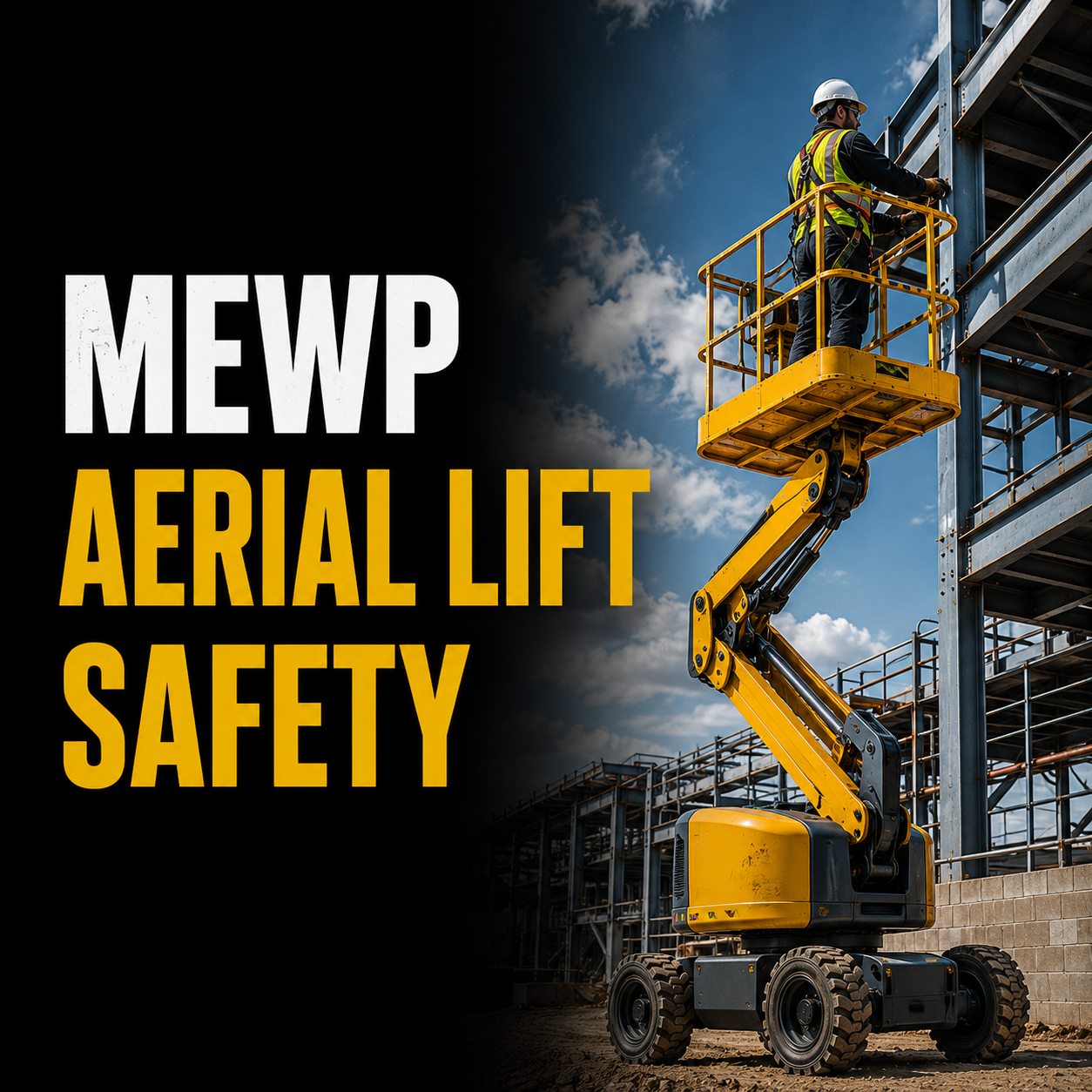
Recommended certification
MEWP Aerial Lift Safety
$45 · ~1h online · certificate issued same day · valid 2 years
Also read: AI-Powered Drone Tower Inspections: Threat or Opportunity for Certified Climbers · Carriers Demand NATE Certification While GCs Slash $2M Training Budgets
Objection 2: "I can't afford certification training."
The cost is typically $200–$400. One 40-hour project at certified operator rates ($65–$75/hour) nets you $2,600–$3,000, paying for certification 6–15 times over. Even comparing to one uncertified week of work ($40–$50/hour = $1,600–$2,000), certification pays for itself in one or two additional certified jobs. This is the best ROI available in construction trades. Delaying certification because of $300 cost while losing $400–$600/week in wage differential is financially irrational.
Objection 3: "My employer won't care if I'm certified."
Some won't. But the market will. The minute you job search or bid on a new project, certification is either a gate-pass or a disqualifier. Even if your current employer doesn't explicitly require it, you're betting your entire career on never needing another job. That's not a strategy—it's risk exposure. Certification is portable, permanent (within renewal cycles), and universally recognized. It's the definition of career insurance.
Objection 4: "I'll get certified when I need it."
This is the most dangerous assumption. Most premium projects have 1–2 week lead times. By the time you realize you need certification, it's too late to scramble. You'll miss the opportunity. Workers who stay proactively certified always have optionality; uncertified workers are always reactive and scrambling. Certification right now means you can say "yes" to opportunities next week. Waiting means you'll say "no" and watch someone else earn your money.
Why BuildRight Academy Matters: Quality, Speed, and Credibility
Not all online certifications are equal. I recommend BuildRight Academy specifically because:
Built to OSHA standards: BuildRight follows OSHA and ANSI training requirements, and what you get is a certificate of completion that verifies online by its own code. Outside OSHA's Outreach program no provider's course is OSHA-approved; whether a certificate satisfies a given site is the employer's or site owner's call.
Content quality: The MEWP operator training course covers platform types (boom lifts, scissor lifts, vertical lifts), load calculations, hazard recognition, fall protection, emergency procedures, and regulatory requirements. It's practical and immediately applicable. I've reviewed the modules and they reflect real field scenarios, not academic abstractions.
Speed and flexibility: You can complete the course in one intensive day, or spread it across several days. Modules are 15–30 minutes each, designed for workers with actual schedules. Mobile-friendly interface means you can study on job sites, during lunch breaks, or in the evening.
Immediate certification: Pass the assessment, receive your certificate instantly. Upload it to LinkedIn, email it to prospective employers, or screenshot it for your records. No waiting. No bureaucratic delays.
Affordable pricing: Typically $299–$399 depending on bundle selections. Compare to $600–$1,200 for equivalent in-person training plus travel costs. You're saving money and time.
Renewal support: Certifications typically need renewal every 3 years. BuildRight makes renewal straightforward and affordable, so you're not starting from scratch.
This isn't a sales pitch based on brand loyalty—it's based on 12 years of observing what works in the field and what credentials employers actually respect.
The Decision: Certified by Next Week or Competing Against Certified Workers for the Next Year
Here's the honest frame:
You have two paths forward:
Path A (Get Certified Now): Invest one day, $300–$400, and become immediately eligible for $15,000–$35,000 in additional annual earnings, access to premium projects, and future-proofed against regulatory shifts. Your certificate is valid immediately. By next month, you're bidding on better jobs. By next year, you've captured $20,000–$50,000 in additional income and built credential momentum.
Path B (Wait and See): Stay uncertified, watch competitors get hired for premium roles, eventually get pushed into a corner when regulatory requirements tighten, then scramble to get certified under pressure. You lose 12–24 months of premium earning opportunity and face competitive disadvantage when you finally make the move. You also risk insurance exclusions, employer liability, and being passed over for advancement.
Path A costs $300. Path B costs $20,000–$50,000 in lost earnings plus career momentum.
The window is open. There are no cohorts to wait for: enrollment is open and the course starts the moment you pay. Don't be the person explaining to your family why you didn't invest one day when you had the chance.
**Get certified in a day. Earn more on every project. Start this week.**
About the Author
Yauheni Butko brings 12+ years of hands-on experience in telecom and construction, backed by a B.S. in RF Engineering & Radio Components Modeling. Over his career, he's built deep expertise in telecom infrastructure deployment, construction safety protocols, and workforce development. His articles combine technical rigor with practical field knowledge—the perspective of someone who's managed projects, trained teams, and watched certification decisions directly impact worker earnings and career trajectory. When he writes about MEWP training, it's not theory. It's observed reality from over a decade in the field.
The window is open. Get certified now: /courses Start today — the course is self-paced and the certificate is issued the moment you finish.
Operating the platform: parts, limits and the rules that keep it upright
Certification gets you cleared to operate. What follows is the part of the job the card does not cover — the machine itself, the limits it works inside, and the checks that stop a lift from going wrong.
If the MEWP level indicator shows stability is near operating limits, immediately cease operations and lower the platform. Operating only on stable, level ground and adhering strictly to the manufacturer's maximum angle specifications are crucial to prevent tip-overs. Always check weather forecasts and cease operations if conditions like high winds or wet surfaces deteriorate, as these significantly increase incident risk.
Mobile elevated work platform (MEWP) training and operator certification represent critical components of construction safety. Whether you're working on a commercial building project, performing maintenance tasks, or conducting utility work at height, understanding proper mobile elevated work platform training and safety protocols can be the difference between a productive day and a life-altering accident. This comprehensive guide covers everything aerial lift operators need to know about staying safe while working at elevation, including the latest safety standards, inspection procedures, and regulatory requirements for MEWP operator training and certification.
Top MEWP Hazards and How to Avoid Them
Aerial lift safety incidents remain a significant concern in the construction industry. According to OSHA statistics, approximately 42% of aerial lift-related fatalities involve workers who were not wearing fall protection, while 24% of fatal incidents occur due to operators exceeding platform weight capacity limits. Understanding these hazards is the first step toward prevention.
The most critical MEWP hazards include electrocution from contact with overhead power lines, falls from elevated platforms, tip-overs due to uneven surfaces or excessive speed, and structural collapse from overloading. Each hazard requires specific prevention strategies. To avoid electrocution, maintain a minimum 10-foot clearance from power lines and consider the boom reach before positioning equipment. Prevent falls through proper fall protection systems and harness attachment points rated for your weight and the anticipated shock load. Reduce tip-over risks by operating only on stable, level ground and adhering strictly to the manufacturer's maximum angle specifications. Never exceed platform weight limits—this includes personnel, tools, and materials.
Environmental factors also play a crucial role in safe MEWP operation. High winds, wet surfaces, and poor visibility significantly increase incident risk. Many facilities establish operational wind speed limits (typically 25-30 mph) beyond which MEWPs remain grounded. Always check weather forecasts before beginning work and cease operations immediately if conditions deteriorate.
Pre-Operation Inspection Checklist
A thorough pre-operation inspection is your first line of defense against equipment failure. OSHA requires that operators conduct visual inspections before each use, and many insurance providers mandate documented inspection records. The following checklist should be completed before every shift:
- Platform condition: Check for bent railings, cracked welds, broken flooring, or debris that could cause slips
- Safety rails and gates: Verify all guardrails are intact and gates close and lock properly
- Hydraulic systems: Look for leaks around cylinders, hoses, and connections; check fluid levels on the indicator
- Tires and wheels: Inspect for proper inflation, tread depth, cuts, or uneven wear patterns
- Boom and articulation: Test all boom sections for smooth movement, unusual sounds, or binding
- Control systems: Verify all buttons, switches, and emergency controls respond correctly
- Battery condition (electric units): Check charge level and look for corrosion on terminals
- Engine fluids (gas/diesel units): Confirm adequate oil, coolant, and fuel levels
- Safety devices: Test load sensors, inclinometers, and emergency descent systems
- Harness and anchorage points: Inspect for tears, fraying, or damaged attachment rings
- Documentation: Review maintenance records and note any outstanding repairs
Document your inspection with date, time, operator name, and any defects found. If issues are discovered, tag the equipment out of service immediately and report the problems to supervisors.
Safe Operating Procedures
Proper MEWP operator training covers fundamental operating principles that protect both the operator and ground personnel. Always review the specific manufacturer's manual for your equipment model, as operational requirements can vary significantly between different machines.
Begin each operation by establishing a clear work zone. Use traffic cones or barriers to keep unauthorized personnel at least 30 feet away from the MEWP, except when workers are assisting with setup or takedown. Ensure all personnel understand hand signals or communication methods—radios are ideal for noisy environments.
Never operate a MEWP alone. Maintain constant communication with a ground spotter who can monitor for hazards you cannot see from the platform. Climb into the platform smoothly using both hands and feet; do not jump. Once in the platform, secure your full-body harness to an anchorage point before raising the boom. Many serious injuries occur when operators delay this critical step.
Operate controls with deliberate, steady movements. Sudden jerking motions can destabilize the platform or cause you to lose your footing. Always keep the platform horizontal or within manufacturer-specified angles. When positioning over obstacles or soft ground, distribute weight evenly and avoid concentrated loads at platform edges. Maintain three points of contact when climbing or moving within the platform, and never lean beyond railings to reach tools or materials.
Fall Protection Requirements for MEWP Operators
Fall protection is non-negotiable in aerial lift work. OSHA requires 100% fall protection for any work at heights exceeding 6 feet, and most construction sites mandate fall protection for all elevated platform work regardless of height. Your protection system consists of multiple components that must work together seamlessly.
A proper full-body harness distributes fall forces across your torso, preventing the cinch injuries that can result from waist-only belts. Harnesses must fit snugly with no more than one finger fitting under the shoulder straps. Connect your harness to an anchorage point on the platform using a shock-absorbing lanyard or self-retracting lifeline. The anchorage must be rated for at least 5,000 pounds or a safety factor of at least 2.5 times the maximum intended load.
Maintain your fall protection equipment carefully. Inspect harnesses before each use for torn webbing, bent hardware, or damaged stitching. After a fall, the entire system must be removed from service and replaced, even if damage isn't immediately visible. Store equipment away from direct sunlight, moisture, and sharp objects that could cause hidden damage.
Never use fall protection equipment as a substitute for proper operating procedures. Fall protection is your backup system—your primary protection comes from stable operation and hazard avoidance.
When MEWP Certification Is Legally Required
MEWP certification requirements vary by jurisdiction and industry, but federal OSHA standards require that operators receive training appropriate to the equipment they operate. Many states and municipalities have adopted stricter requirements, mandating formal certification through accredited providers.
The most widely recognized credential is the Certified Mobile Elevated Work Platform Operator certification, which demonstrates competency across all major equipment types and scenarios. Some employers require certification even where regulations do not, viewing it as a best practice that reduces liability and insurance costs. Check your local regulations and company policies to determine your specific requirements.
Certification typically involves both classroom instruction covering hazard recognition, safety regulations, and maintenance procedures, plus hands-on practical training where you operate equipment under qualified supervision. Your MEWP certification online option may satisfy classroom components through interactive digital content, though most jurisdictions require in-person practical evaluation.
How Online MEWP Training Works
Online aerial lift safety training has evolved significantly, now offering comprehensive preparation that meets industry standards. Most quality programs combine video instruction, interactive modules, knowledge assessments, and detailed course materials that cover OSHA regulations, hazard recognition, equipment operation, maintenance procedures, and emergency response.
Effective online programs are developed by industry experts with decades of field experience and regularly updated to reflect current regulations and equipment innovations. You'll access course materials on your schedule, working through modules at a pace that allows proper comprehension. Self-assessments help identify knowledge gaps before you take final certification exams.
Upon completion of online coursework, you'll receive documentation of training completion. Many programs integrate with in-person practical training partnerships, allowing you to complete classroom work online, then schedule local hands-on evaluation with a qualified instructor.
Complete your MEWP operator certification 100% online through our comprehensive safety training program. We provide the knowledge foundation and documentation you need to operate MEWPs safely and legally.