NFPA 70E Training
and Arc Flash Safety Online
The electrical safety standard itself, taught the way it is used on site: risk assessment before the cover comes off, approach boundaries, arc-rated PPE chosen against incident energy, and the conditions under which energized work can be justified at all. 3.5 hours, self-paced, certificate of completion the same day.
Built to OSHA standards · Unlimited free retakes
3.5 hours
self-paced, any device
Same day
certificate of completion
2 years
verifies online by code
Free retakes
on the final test, unlimited
What NFPA 70E is, and what it asks of you
NFPA 70E is the Standard for Electrical Safety in the Workplace, published by the National Fire Protection Association. OSHA writes the law and says workers exposed to electrical hazards must be trained; 70E is the consensus document that says what that training and those work practices actually look like — risk assessment, approach boundaries, arc-rated PPE, and the electrically safe work condition you are supposed to establish before touching anything.
The standard puts three duties on an employer, and they are the ones that show up in citations: a written electrical safety program, training for anyone exposed to a risk of electrical injury, and retraining at least every three years — sooner if the work changes, the equipment changes, or an audit says the practices have drifted. That is Article 110, and it is the part of 70E most people have never read.
Where this sits next to our other two electrical courses. NFPA 70E is the standard; the Qualified Electrical Worker course is about the *person* the standard expects and how an employer designates one; Medium Voltage Safety is about what changes above 1,000 volts — step and touch potential, minimum approach distance, temporary protective grounding. Take this one if what you need is the standard itself: what it requires, how the arc flash risk assessment runs, and what belongs on an energized electrical work permit.
Read this before you buy from anyone
NFPA does not certify training. There is no such thing as an NFPA certification.
The National Fire Protection Association publishes the standard; it does not approve, accept or certify courses or people, and neither does OSHA outside its own Outreach program. Anyone selling you an “NFPA certification” is selling a word the organisation does not issue. What a course can do is deliver and document the training half — this one is built to NFPA 70E and OSHA electrical safety standards and ends with a certificate of completion that verifies online by its own code. The rest belongs to your employer: the written electrical safety program, the arc flash risk assessment for your equipment, the labels, the permits, and the judgement that you are qualified for the specific task in front of you.
The training
Built to NFPA 70E and OSHA electrical safety standards, documented with a certificate that verifies online by its own code.
The program
Your employer’s: the written safety program, the arc flash study and equipment labels, the permits, and the call that you are qualified.
What the training covers
7 modules · 20 lessons, final assessment included. Full lesson list →
- 01
The electrical safety program
Article 110 duties, how 70E sits against OSHA 1910 Subpart S and the NEC, the training and audit obligations, and the three-year retraining interval nobody diarises.
- 02
Shock and arc flash hazards
What current does to a body, what an arc blast releases, and why incident energy — not voltage — is the number PPE is chosen against.
- 03
Risk assessment procedure
The shock and arc flash risk assessments, the hierarchy of risk controls, and human error as a factor the standard names outright.
- 04
Approach boundaries
Limited, restricted and arc flash boundaries — where they sit, who may cross them, and what crossing one obliges you to have on.
- 05
Arc-rated PPE
The PPE category method and the incident energy analysis method, arc ratings and layering, and inspecting the gear you are trusting.
- 06
Energized work, permits and response
Establishing an electrically safe work condition, LOTO, when energized work is justifiable at all, what an energized work permit has to carry, and first response after an incident.
Who needs NFPA 70E training
The standard covers anyone exposed to a risk of electrical injury at work, which is a much wider group than the people whose job title says electrical. Arc flash injuries reach maintenance techs, machine operators and supervisors who opened a panel to look at something.
Electricians and apprentices
Panel, switchgear and control work, where 70E governs the approach, the PPE and the paperwork.
Industrial and facilities maintenance
Troubleshooting drives, resetting breakers, servicing equipment that stores energy after the disconnect is open.
Safety managers and supervisors
You own the electrical safety program, the labels and the permits — you need the standard’s own vocabulary to audit them.
Telecom and utility technicians
Rectifiers, generators and cabinets at the base of a site nobody thinks of as electrical work.
How it works
- 1
Enrol
Card checkout, no account needed up front — you set your password the moment you pay.
- 2
Study at your pace
On any device. Progress saves, so you can stop mid-lesson and pick it up on the truck.
- 3
Pass the test
Multiple-choice final assessment. Unlimited retakes, free — nobody pays twice for a second attempt.
- 4
Download the certificate
Issued the same day with a unique code that verifies online for 2 years.
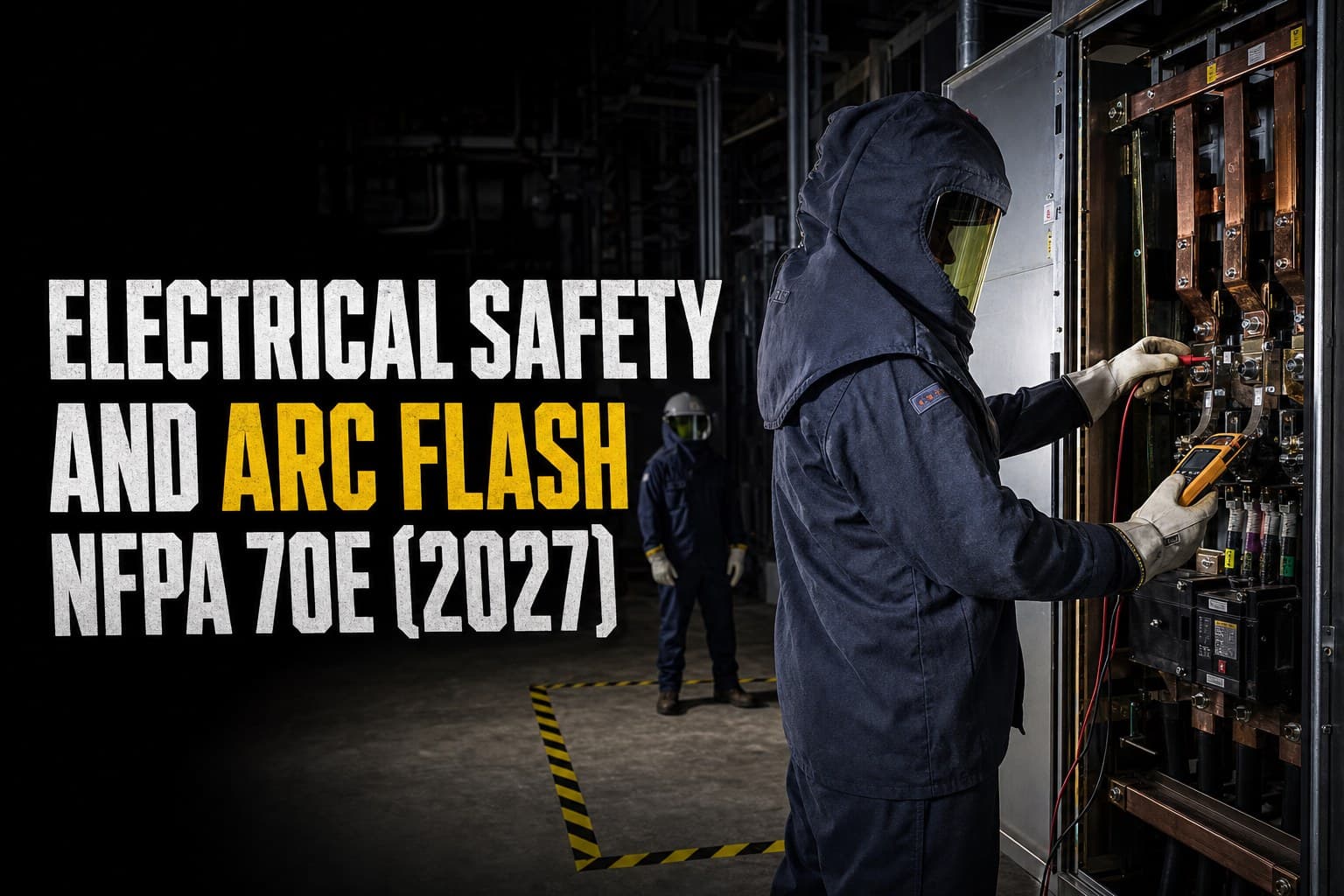
Electrical Safety & Arc Flash Training — NFPA 70E® (2027)
3.5 hours, self-paced, on any device. Unlimited free retakes on the final test. Certificate of completion issued the same day and verifiable online for 2 years.
Frequently asked questions
What is NFPA 70E?
The NFPA 70E Standard for Electrical Safety in the Workplace. It is the consensus standard that tells employers and workers how to do electrical work safely: assess the risk, establish an electrically safe work condition where you can, observe approach boundaries where you cannot, and wear PPE rated against the incident energy present. OSHA regulations require safe work practices and training; 70E is the document that spells out what those look like in practice.
Is NFPA 70E training required by law?
NFPA 70E is a consensus standard, not a regulation, so it is not law by itself. OSHA’s electrical safety regulations do require training for employees exposed to electrical hazards, and OSHA cites 70E as the recognised industry practice for meeting them — which is why site owners, insurers and prequalification packets ask for it by name. In practice, if a contract or a GC asks for 70E training, that is the requirement you are answering.
How often is NFPA 70E retraining required?
The standard says at intervals not to exceed three years, and sooner when any of several triggers fire: the job changes, new technology or procedures are introduced, the employee is not using safe work practices, or an audit finds a gap. Many employers run it on a two-year cycle to leave room for the triggers, which is also the interval our certificate is written to.
Is this an NFPA certification?
No, and nobody sells one. The NFPA publishes the standard; it does not certify training providers, courses or workers. This is an independent BuildRight Academy course built to NFPA 70E, and what you receive is a certificate of completion with a code that verifies online. Treat “NFPA Certified” or “NFPA Approved” on any provider’s page as a reason to look harder at the rest of their claims.
Is this course OSHA-approved?
No provider’s course is. Outside the OSHA Outreach Training Program — the OSHA 10/30 DOL-card system delivered by OSHA-authorized trainers — OSHA does not approve, accept or certify training. Our courses are built to OSHA standards, and what you receive is a certificate of completion that verifies online by its own code. Whether it satisfies a given site is the employer’s or site owner’s decision.
What is the difference between NFPA 70E training and QEW training?
NFPA 70E is the standard; a qualified electrical worker is the person the standard expects to be doing the work. This course teaches the standard — what it requires, how the risk assessment runs, what goes on a permit. The QEW course teaches the same electrical safety material framed around the designation itself: what makes someone qualified, and who decides. Most people need one of the two; if your site paperwork asks for “NFPA 70E training” by name, this is the one.
Do I need this if I already took Medium Voltage Safety?
They answer different questions. Medium Voltage Safety is about what changes above 1,000 volts — step and touch potential, minimum approach distance, switching, temporary protective grounding, live-line tools. This course is the standard that governs the work below that line, where most electrical work happens, and it goes deeper on arc flash risk assessment and permits. Crews that work both sides of a transformer usually end up with both, which is what the electrical bundle is for.
How long does the course take?
Self-paced, and most people finish it in a sitting or two. Progress saves as you go, so you can stop mid-lesson and pick it up on the truck. The final test is multiple choice with unlimited free retakes — nobody pays twice for a second attempt.
Can I train a whole crew at once?
Yes. Buy seats once from the team dashboard, assign the course to each worker, and watch completion in real time. You get a certificate roster with QR codes to show a site checker without chasing anyone for paperwork.
Related electrical safety training
Further reading
$85
3.5 hours · certificate today