A tragic incident in December 2025 in Madison County, Alabama, serves as a stark reminder of the paramount importance of trenching and excavation safety. A construction laborer lost their life when a trench collapsed during sewage drainpipe installation. This fatality prompted an investigation by the U.S. Department of Labor's Occupational Safety and Health Administration (OSHA), which ultimately cited Huntsville-based home builder Breland Homes Inc. with eight serious safety violations and proposed penalties totaling $115,855.
This incident is a critical case study for field crews, crew leads, and safety managers across the construction and infrastructure industries, highlighting how a cascade of safety failures can lead to devastating consequences.
The Incident and OSHA's Findings
OSHA investigators determined that the deceased worker was engaged in duties within an unprotected and unsupported section of the trench when the collapse occurred. This direct failure in providing adequate trench protection was a primary factor in the fatality. However, OSHA's investigation uncovered a broader pattern of safety neglect.
In addition to the lack of trench support, Breland Homes Inc. was cited for:
- Failure to train workers to recognize unsafe conditions in trenching.
- Allowing workers to conduct duties without protective helmets.
- Permitting employees to work with a damaged ladder.
These findings suggest that the trench collapse was not an isolated oversight but rather indicative of systemic issues in safety management and adherence to established protocols. The proposed penalties of $115,855 reflect the seriousness of these violations and OSHA's commitment to enforcing workplace safety standards.
Understanding Trenching Hazards
Trenching and excavation work are among the most dangerous operations in construction. According to OSHA, one cubic yard of soil can weigh as much as a car, and trench collapses can occur in seconds, leaving workers little to no time to react or escape. OSHA standard 1926 Subpart P, "Excavations," outlines comprehensive requirements designed to prevent these tragedies.
Key aspects of trench safety, which were evidently not met in this incident, include:
- Protective Systems: Trenches 5 feet or deeper require protective systems unless they are entirely in stable rock. These systems include sloping the trench walls to a safe angle, shoring the trench with supports, or shielding workers with trench boxes or shields.
- Competent Person: A designated "competent person" must be on site daily to inspect trenches, adjacent areas, and protective systems for evidence of a possible cave-in, hazardous atmospheres, or other hazardous conditions. This individual must have the authority to remove workers from unsafe conditions.
- Access and Egress: Safe means of entry and exit, such as ladders, ramps, or stairways, must be provided within 25 feet of workers in trenches 4 feet or deeper.
The failure to implement these fundamental protections directly exposed workers to life-threatening hazards, culminating in the December 2025 fatality.
Beyond the Trench: Broader Safety Gaps
The OSHA citations extend beyond just trenching, pointing to other critical safety lapses. The absence of protective helmets and the use of a damaged ladder are significant indicators of a broader disregard for fundamental safety practices. Helmets are essential personal protective equipment (PPE) for protecting workers from falling objects or impacts, common hazards on construction sites. Similarly, damaged ladders pose severe fall risks and should be immediately removed from service.
Recommended certification
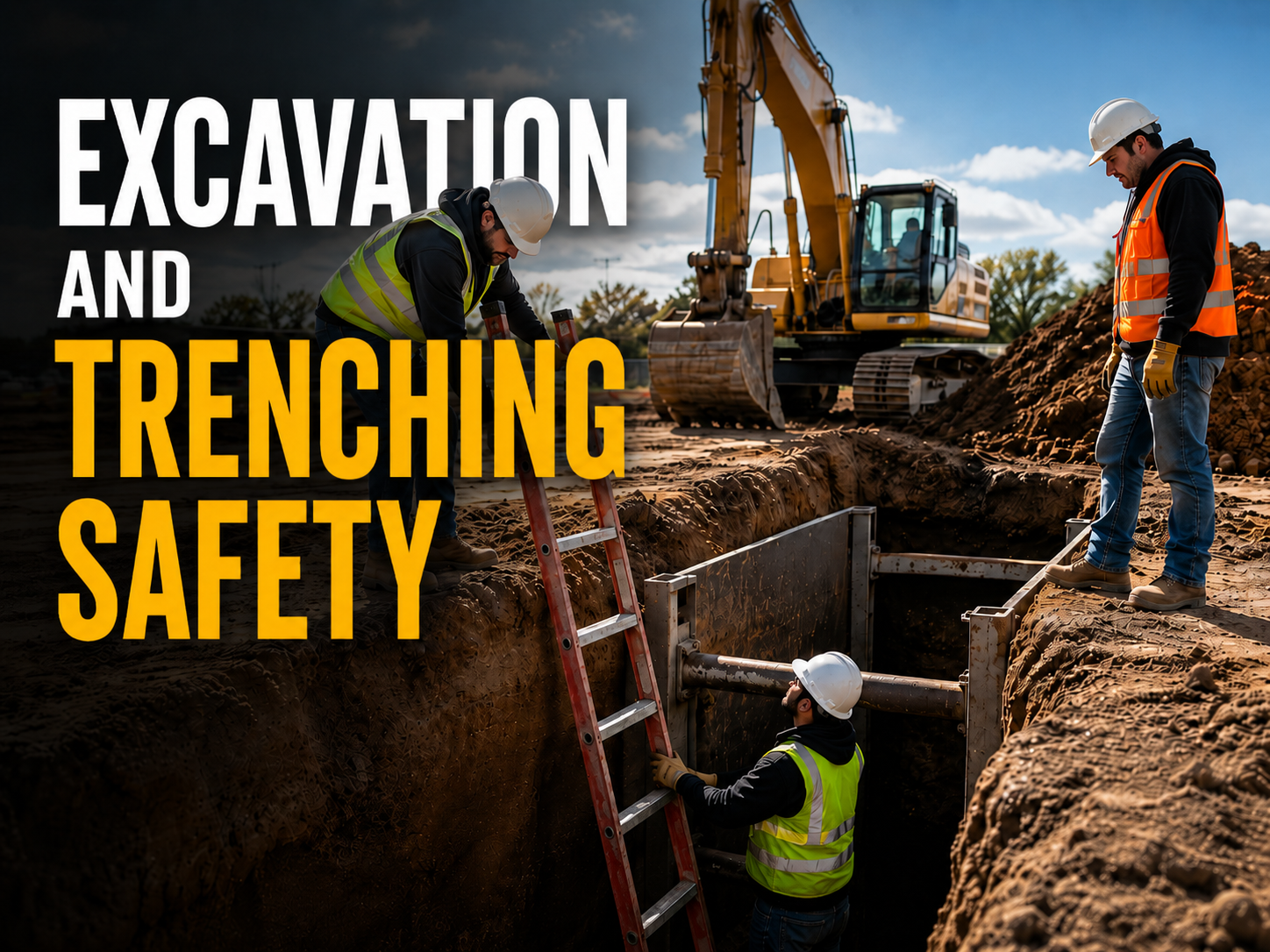
Excavation and Trenching Safety
$35 · ~3.5h online · certificate issued same day · valid 2 years
Also read: Houston Contractor Fined $343K After Excavation Collapse · Florida Roofing Contractor Faces $349K Fine for Repeated Fall
These additional violations underscore that safety is not a singular focus but a holistic commitment. Neglecting basic PPE or allowing unsafe equipment to remain in use creates a work environment where hazards are normalized, increasing the likelihood of incidents, even those unrelated to the primary task at hand.
Critical Takeaways for Field Crews
For tower climbers, construction workers, and all field personnel, this incident serves as a crucial reminder:
- Recognize and Report Hazards: Be vigilant. If you observe an unprotected trench, damaged equipment, or any other unsafe condition, it's your responsibility to report it immediately to your supervisor or safety manager. Never assume someone else has seen it or will take action.
- Demand Proper Training: Ensure you receive and understand training on all tasks you perform, especially high-hazard operations like trenching. Training should cover hazard recognition, proper use of protective systems, and emergency procedures.
- Use Your PPE: Always wear the required personal protective equipment, including hard hats, safety glasses, and appropriate footwear. PPE is your last line of defense.
- Know Your Rights: Workers have the right to a safe workplace. If you believe a condition is imminently dangerous, you have the right to refuse to perform the task until the hazard is addressed. This right is aligned with OSHA requirements.
Responsibilities for Crew Leads and Safety Managers
This incident places a heavy emphasis on the critical role of leadership in safety:
- Proactive Hazard Assessment: Before any ground-disturbing work begins, conduct thorough site assessments. Identify all potential hazards, including soil conditions, proximity to utilities, and potential for water accumulation.
- Ensure Proper Protective Systems: For trenching, always implement appropriate protective systems (sloping, shoring, or shielding) that are designed and installed by a competent person.
- Comprehensive Training Programs: Invest in robust training programs that go beyond basic awareness. Workers must be trained to recognize specific hazards, understand the relevant OSHA standards, and know how to use protective equipment and systems correctly.
- Daily Inspections: A competent person must perform daily inspections of trenches and excavation sites, and all equipment, especially ladders, before work begins. Any damaged equipment must be tagged out and removed from service immediately.
- Foster a Safety Culture: Encourage open communication where workers feel safe reporting hazards without fear of reprisal. A strong safety culture, where safety is prioritized over speed or convenience, is the most effective preventative measure against incidents.
The Cost of Non-Compliance
The $115,855 in proposed penalties against Breland Homes Inc. is a significant financial consequence. However, the true cost of this incident is immeasurable. A worker lost their life, leaving behind family and loved ones. The company faces not only financial penalties but also reputational damage, potential legal action, and the profound impact on its workforce. This tragic event underscores that adhering to safety standards is not merely a regulatory burden but a moral imperative and a sound business practice.


