MEWP Operator
Training and Certification Online
Operator training for mobile elevated work platforms — scissor lifts, boom lifts and vertical masts. Pre-use inspection, stability and load limits, fall protection on the platform, and safe operation to OSHA and ANSI A92 standards. 1 hour, self-paced, certificate of completion the same day.
Built to OSHA standards · Unlimited free retakes
1 hour
self-paced, any device
Same day
certificate of completion
2 years
verifies online by code
Free retakes
on the final test, unlimited
What is a MEWP, and what does the training have to cover?
MEWP stands for mobile elevated work platform — the ANSI A92 family name for equipment most crews still call an aerial lift, scissor lift, boom lift, cherry picker or man lift. The name changed in 2018 when the A92 standards were rewritten around it, which is why the paperwork on a jobsite and the words people say to each other often do not match.
The rewrite split the requirement in two, and this is the part that catches employers out. General operator training covers the class of machine: how MEWPs are classified, what makes them tip, load and terrain limits, fall protection on a platform versus at height, inspection and emergency descent. Familiarization is separate and is specific to the exact model you are about to operate — its controls, its capacity chart, where its emergency lowering valve is.
Read this before you buy from anyone
Training is one requirement. Familiarization is the other, and it happens on the machine.
Under the ANSI A92 standards your employer has to familiarize you with the specific MEWP model before you use it — the controls, the load chart, the emergency lowering for that unit. No online course can do that part, because it happens standing at the machine. What this course delivers is the general operator training and a certificate of completion documenting it, which is the piece your employer needs on file. Treat any provider implying a certificate alone clears you to operate any lift on any site with suspicion.
Operator training
The general training, documented with a certificate of completion — the piece your employer needs on file.
Familiarization
Your employer, standing at the machine: that model’s controls, load chart and emergency lowering.
What the training covers
6 modules · 18 lessons, final assessment included. Full lesson list →
- 01
Pre-use inspection
The walkaround and function test before the platform leaves the ground, and what a defect tag actually obliges you to do.
- 02
Load limits and stability
Rated capacity, occupants plus tools plus material, and the geometry that decides whether a machine tips.
- 03
Fall protection on a platform
Why a boom lift and a scissor lift have different answers, harness and lanyard selection, and correct anchorage.
- 04
Terrain and environment
Slopes, soft ground, holes and drop-offs, overhead obstructions, wind, and working near energized lines.
- 05
Hazard recognition
Crushing at overhead structures, ejection, contact with traffic, and the mistakes that recur in incident reports.
- 06
Emergency planning and rescue
Ground controls, emergency descent, and having a rescue plan before someone is stuck at height.
Who needs MEWP training
Anyone who operates the platform, and often the people who supervise it. Aerial lift incidents are consistently among the most fatal in construction, and the two causes that recur are tip-over and contact with something overhead.
Aerial lift operators
Scissor and boom lifts on construction, maintenance and fit-out work.
Warehouse and facilities crews
Racking, lighting, HVAC and ceiling work on rough or smooth terrain machines.
Telecom and utility techs
Rooftop and pole work where the lift sits near energized lines and traffic.
Supervisors and site leads
You sign off the plan and the rescue arrangements, so you need the same vocabulary.
How it works
- 1
Enrol
Card checkout, no account needed up front — you set your password the moment you pay.
- 2
Study at your pace
On any device. Progress saves, so you can stop mid-lesson and pick it up on the truck.
- 3
Pass the test
Multiple-choice final assessment. Unlimited retakes, free — nobody pays twice for a second attempt.
- 4
Download the certificate
Issued the same day with a unique code that verifies online for 2 years.
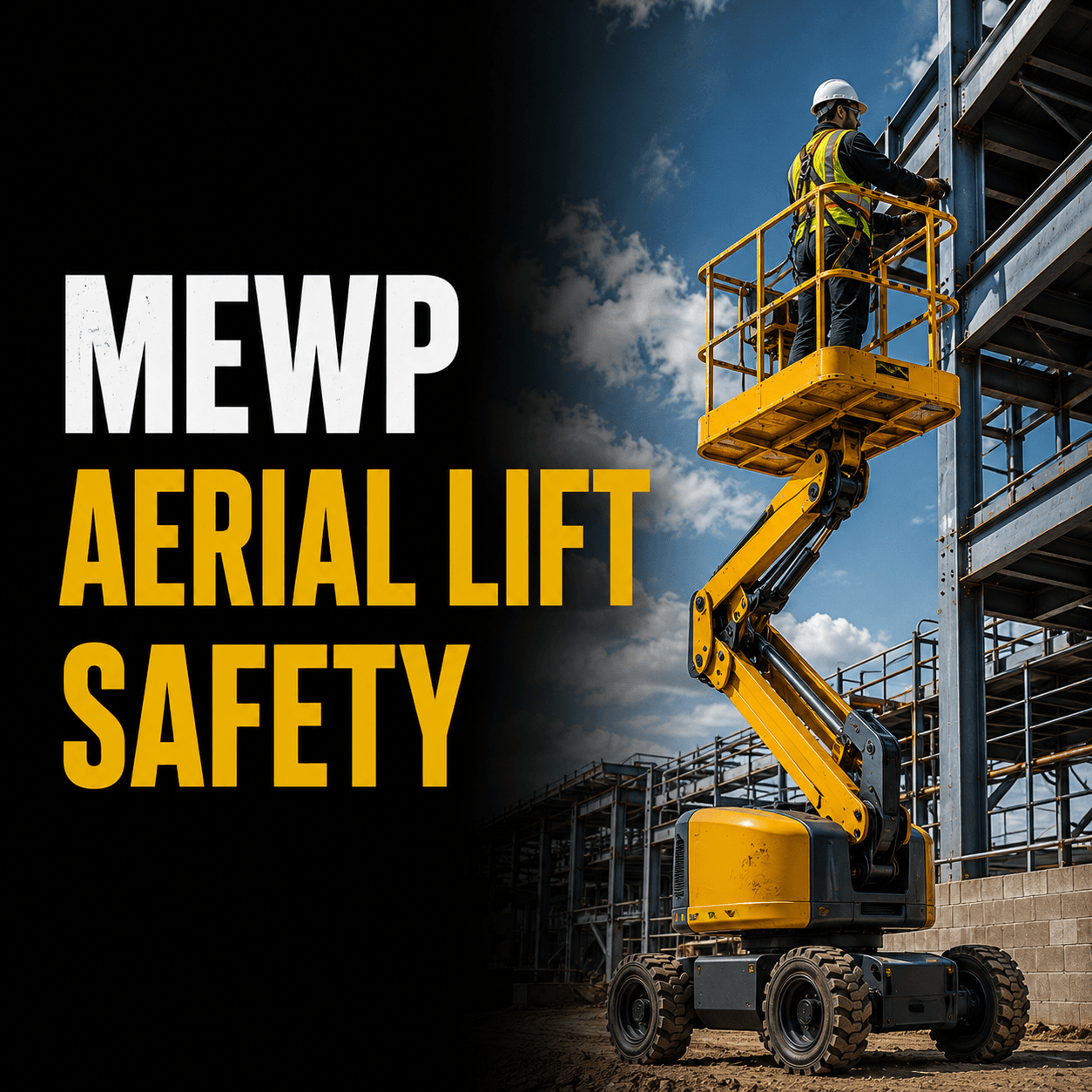
MEWP Aerial Lift Safety
1 hour, self-paced, on any device. Unlimited free retakes on the final test. Certificate of completion issued the same day and verifiable online for 2 years.
Frequently asked questions
What does MEWP stand for?
Mobile elevated work platform. It is the ANSI A92 term for equipment previously called an aerial work platform or aerial lift, and it covers scissor lifts, boom lifts, vertical mast lifts and similar machines. If your site paperwork says “aerial lift training” and the course says MEWP, they mean the same equipment.
Does this course certify me to operate any lift?
It gives you the general operator training and documents it. Before you use a particular machine your employer still has to familiarize you with that model — its controls, capacity chart and emergency lowering. That is an ANSI A92 requirement, it has to happen at the machine, and no online course can substitute for it.
What is the difference between MEWP training and familiarization?
Training is about the class of equipment and transfers between machines: stability, load limits, fall protection, inspection, hazards. Familiarization is model-specific and does not transfer — a different boom lift means familiarization again. Employers commonly have the first and forget the second.
How long does the course take?
About an hour, self-paced, on any device. Progress saves as you go, so it fits in a lunch break or across two short sittings. The final test allows unlimited free retakes.
How long is the certificate valid?
Two years, verifiable online by its unique code for that whole period, and we email you before it expires. Two years is the refresher interval most employers and site owners expect for aerial lift operators.
Is this course OSHA-approved?
No provider’s course is. Outside the OSHA Outreach Training Program — the OSHA 10/30 DOL-card system delivered by OSHA-authorized trainers — OSHA does not approve, accept or certify training. Our courses are built to OSHA standards, and what you receive is a certificate of completion that verifies online by its own code. Whether it satisfies a given site is the employer’s or site owner’s decision.
Do I need separate training for scissor lifts and boom lifts?
The course covers both, because the hazards and the standards are shared. What is not shared is familiarization: a scissor lift and a boom lift handle differently and have different fall protection answers, so your employer has to familiarize you on each model you actually operate.
Can I train a whole crew at once?
Yes. Buy seats once from the team dashboard, assign the course to each worker, and watch completion in real time. You get a certificate roster with QR codes to show a site checker without chasing anyone for paperwork.
$35
1 hour · certificate today