OSHA defines a "competent person" as someone who is capable of identifying existing and predictable hazards in the surroundings or working conditions, and who has authorization to take prompt corrective measures to eliminate them. The definition appears across dozens of OSHA standards — fall protection, excavation, scaffolding — and it's built around two things: the knowledge to spot a hazard, and the actual authority to stop work or fix it on the spot. A foreman who can spot every hazard on a site but has to call someone else before acting on it doesn't fully meet the definition in practice, even if they have the knowledge half covered.
That authority piece is the part new supervisors underestimate. Being named "competent person" on paper means nothing if the crew doesn't understand that stop-work calls get backed up by leadership, every time, without exception.
What a Competent Person Actually Does, Day to Day
Runs a pre-job briefing people actually use
A JSA that gets read aloud and filed is not the same as one that changes how the crew works that day. A real pre-job briefing identifies the specific hazards of today's task — not yesterday's — and gets questions from the crew, not just signatures.
Uses stop-work authority, and backs it up
Giving a crew member stop-work authority only works if using it never costs them anything — no pushback, no "but we're behind schedule." A supervisor's job is to make that authority real, which sometimes means publicly supporting a stop-work call that turned out to be unnecessary, because the alternative teaches the crew not to use it next time.
Walks the site before work starts
A hazard recognition walk isn't a formality — it's specifically about catching what's different today: new equipment staged somewhere unexpected, weather that's changed conditions since yesterday, a subcontractor working nearby that wasn't there before.
Recommended certification
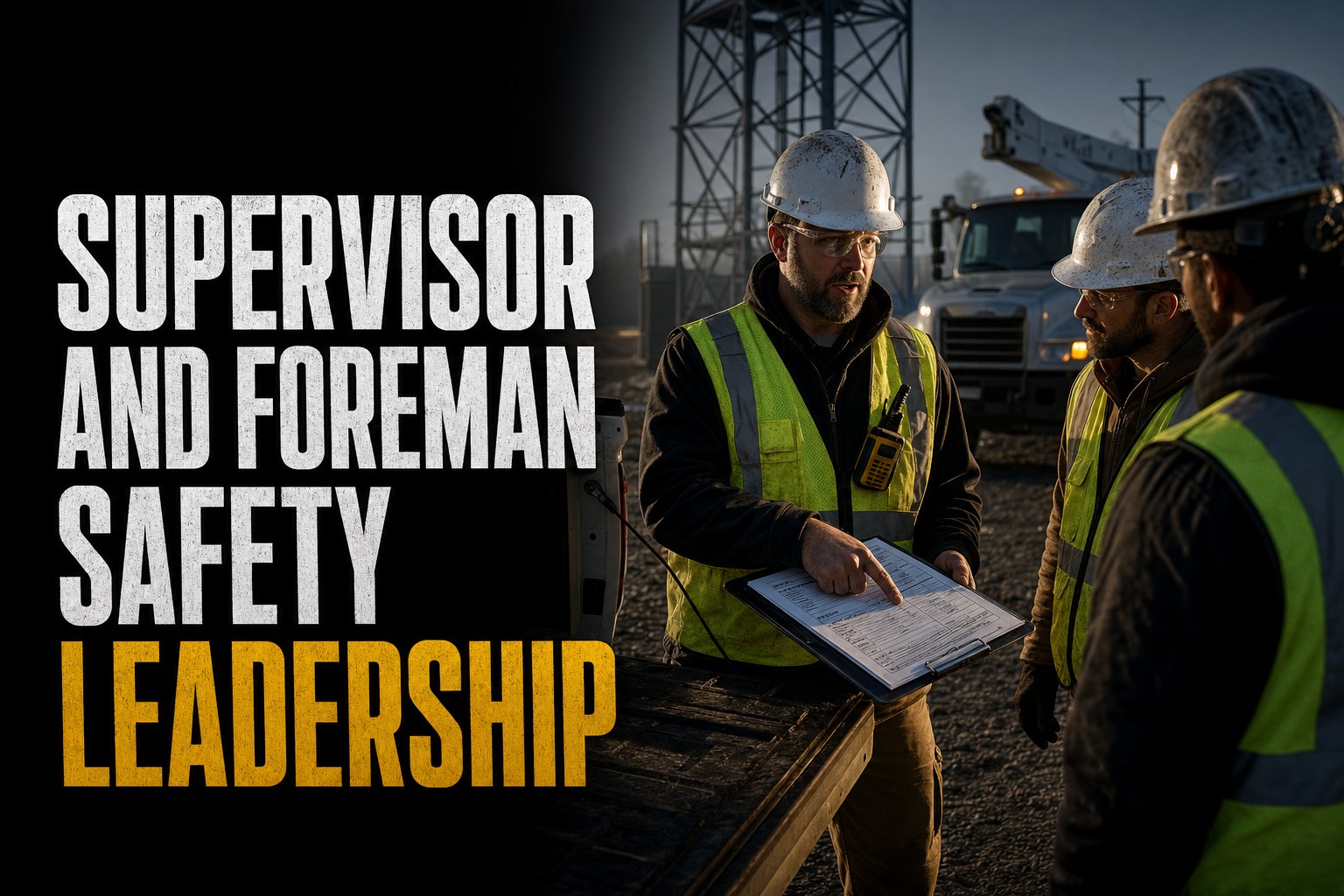
Supervisor & Foreman Safety Leadership
$55 · ~3h online · certificate issued same day · valid 2 years
Also read: Breland Homes Faces $115,855 OSHA Penalties After Fatal Trench · Preventing Trench Fatalities: Key Takeaways from NUCA's Safety Month
When Something Goes Wrong
The first fifteen minutes after an incident set the tone for everything that follows — securing the scene, getting care to whoever needs it, and starting to document facts before memory gets unreliable. A supervisor also needs to know exactly what has to reach the office and how fast, because reporting timelines on serious incidents are not flexible, and "I was going to call it in later" is not a defense.
Growing the Crew
Supervising isn't only about catching hazards — it's coaching an unsafe act the moment it happens without stopping the job entirely, bringing a new hire up to speed without either overwhelming them or leaving them to learn the hard way, and managing the friction that comes from multiple crews or subcontractors sharing one site.
Calls Only the Supervisor Makes
Some decisions sit specifically at the supervisor level: understanding what OSHA 1904 actually requires for recordkeeping (not everything gets recorded, and getting this wrong in either direction creates problems), making the call to slow down or stop work for heat, cold or weather before it becomes an incident, and owning the rescue plan before anyone goes up — not delegating it and assuming someone else has it covered.
What the Course Covers
BuildRight's Supervisor & Foreman Safety Leadership course ($55, about 3 hours) is built for the crew member stepping into that role: running a pre-job briefing and JSA the crew actually uses, giving and backing stop-work authority, the hazard recognition walk, incident response in the first fifteen minutes, reporting requirements, building a near-miss culture, coaching an unsafe act on the spot, supervising a new hire, working with subcontractors, OSHA 1904 recordkeeping basics, making the weather call, and owning the rescue plan. It's training and a certificate of completion — not a substitute for your employer's own safety program.
This course is currently in final review before publication and isn't open for enrollment yet. New supervisors on tower crews should also look at rigging training and dropped objects prevention — hazards a competent person is specifically expected to be able to identify on site.
Frequently Asked Questions
Is "competent person" an official job title?
No. It's a functional designation defined by OSHA across multiple standards — anyone with the knowledge to identify hazards and the authority to correct them can meet the definition, regardless of their formal job title.
Can more than one person on a crew be the competent person?
Yes. There's no limit on how many people can meet the competent person criteria; what matters is that for any given task or hazard, someone with both the knowledge and the authority is actually present and designated.
What's the difference between a competent person and a qualified person?
A competent person can identify hazards and has authority to correct them. A qualified person has specific training, education or experience that demonstrates ability to solve a particular technical problem — the terms apply to different things and aren't interchangeable.
Does OSHA require formal training to become a competent person?
OSHA doesn't mandate a specific course, but the designation requires demonstrated knowledge adequate to identify hazards in that specific work — in practice, that almost always means some combination of training and experience the employer can document.
What does OSHA 1904 require a supervisor to know?
1904 governs recordkeeping — which injuries and illnesses must be recorded, how, and on what timeline. Supervisors are often the first point of documentation, so understanding what counts as recordable (and what doesn't) directly affects whether a company's records are accurate.

