The landscape of wireless infrastructure development and operation often involves navigating a complex web of regulations, from federal mandates to local ordinances. A recent, significant ruling from Massachusetts' highest court has brought clarity to one particular area: the authority of local health boards to intervene in the operation of cell towers based on perceived radiofrequency (RF) health concerns. This decision has important implications for tower crews, crew leads, and safety managers across the United States, reinforcing the primacy of federal standards in RF safety.
Federal Authority Reaffirmed: The Massachusetts Supreme Judicial Court's Ruling
On July 27, 2026, the Massachusetts Supreme Judicial Court (SJC) delivered a unanimous decision in the case of Gilardi v. Board of Health of Pittsfield. The court ruled that the Telecommunications Act of 1996 (TCA) preempts local health boards from shutting down wireless towers based on concerns about RF emissions. This ruling affirmed that the Federal Communications Commission's (FCC) emissions standards are the exclusive benchmark, even in cases where residents attribute physical symptoms to a tower's operation.
The core of the SJC's reasoning, articulated by Chief Justice Kimberly Budd, centered on the principle that radio waves do not respect municipal boundaries. Congress, in enacting the TCA, intended to create a uniform national wireless telecommunications network, which would be impossible if each community could impose its own distinct RF standards. The court noted that a "high quality national wireless telecommunications network cannot exist if each of its components must meet different RF standards in each community" – a direct reflection of the TCA's legislative intent.
The court found that the Pittsfield Board of Health's order failed on two critical fronts. Firstly, it would have allowed a local entity to impose restrictions tighter than the federal standard, potentially impairing the efficiency of the national wireless market. Secondly, and more decisively, it represented an attempt by a local board to override a balancing decision that Congress deliberately assigned to a single federal agency: the FCC. The FCC established the current RF emissions standard in 1996 after extensive consultation with agencies like the Environmental Protection Agency (EPA), Food and Drug Administration (FDA), Occupational Safety and Health Administration (OSHA), and the National Institute for Occupational Safety and Health (NIOSH). This standard was subsequently reaffirmed in 2019.
The Pittsfield Case: A Local Challenge to National Standards
The Gilardi v. Board of Health of Pittsfield case originated in August 2020, when Pittsfield Cellular Telephone Company, operating as Verizon Wireless, activated a 115-foot monopole at 877 South Street in Pittsfield, Massachusetts. Following its activation, residents in the nearby Shacktown neighborhood reported various health issues, including headaches, tinnitus, and nausea, which they attributed to continuous RF exposure from the tower.
In response to these complaints, the city's Board of Health conducted an investigation. On April 11, 2022, the board issued an emergency order, concluding that residents' symptoms were consistent with "radiation sickness" caused by the tower. The board declared the tower a "public nuisance" and ordered Verizon to address the issue or face a shutdown.
Verizon promptly challenged this order in federal court, arguing that the board's action was preempted by the TCA. Faced with this lawsuit, the Board of Health voted to rescind its own order, leading Verizon to drop its case. However, six residents subsequently sued the board directly, arguing that its retreat was arbitrary and capricious and a breach of its duty to abate public health nuisances. A Berkshire Superior Court judge dismissed this lawsuit on preemption grounds, a decision the Massachusetts SJC ultimately upheld.
It's important to note that the Verizon cell site had already passed RF measurements with "flying colors," indicating compliance with existing federal standards. The local board's actions were driven by residents' perceived health issues, not by a failure of the tower to meet established federal RF emission limits.
What This Means for RF Safety on the Ground
For tower climbers, crew leads, and safety managers, this ruling provides crucial clarification regarding regulatory authority in RF safety. While local concerns about RF emissions may arise, the operational reality on the ground remains governed by federal standards.
Recommended certification
RF Awareness & Safety Training
$35 · ~1h online · certificate issued same day · valid 2 years
Also read: FCC's Latest Regulatory Shift: Understanding Its Impact on Telecom · FCC Rules Clarify RF Limits: Focus on Human Safety in Tower Siting
- Identifying RF exposure hazards.
- Understanding exclusion zones and safe distances.
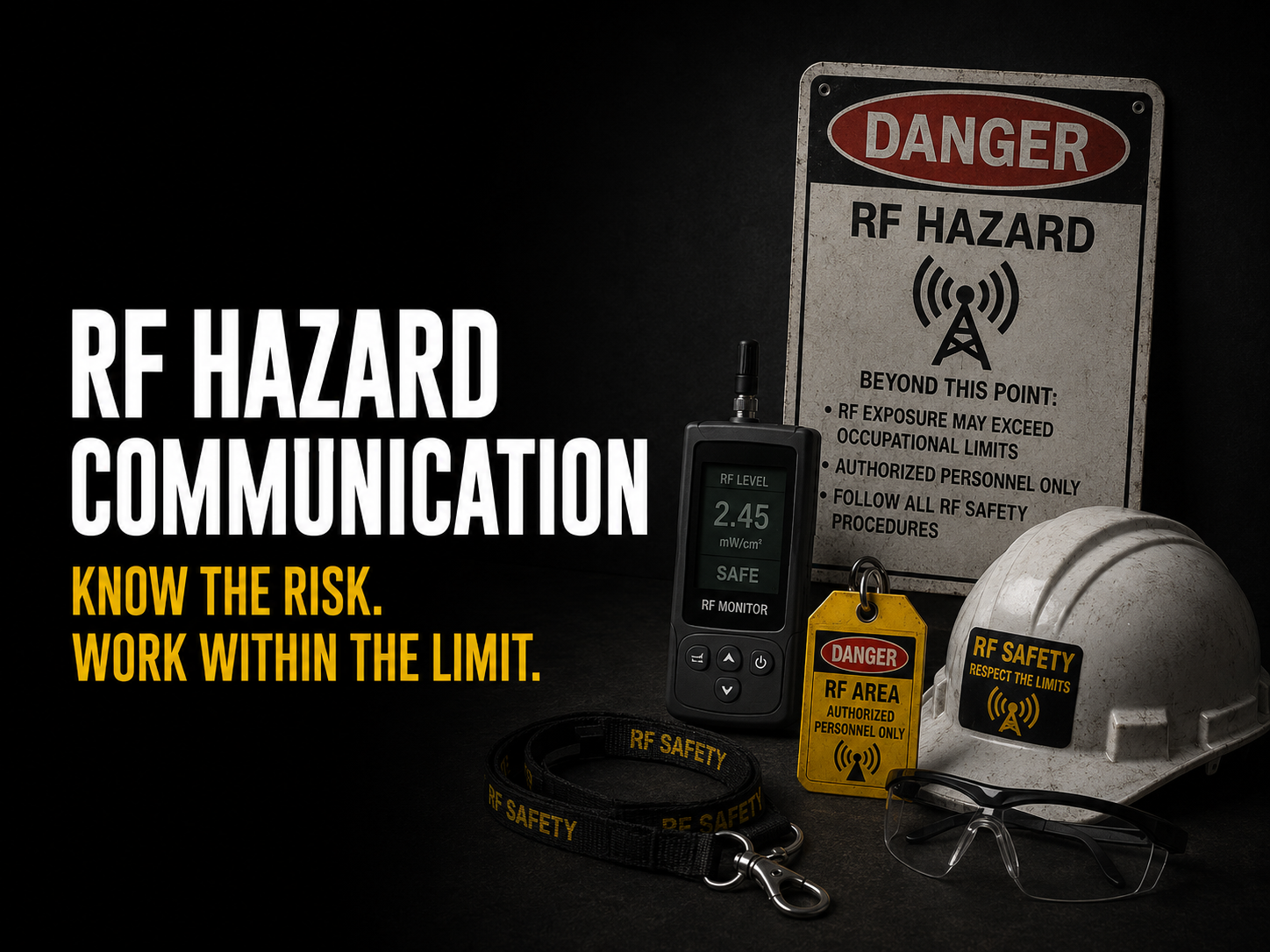
- Proper use of personal protective equipment (PPE), including RF monitors.
- Procedures for power lockout/tagout when working on or near active antennas.
- Emergency protocols in case of accidental overexposure.
Navigating RF Safety: Beyond Local Disputes
The Massachusetts SJC's decision underscores the principle of uniformity in RF regulation, a cornerstone for the development of a reliable national wireless network. This uniformity is vital for the safety of workers who build and maintain this infrastructure. When state and local authorities attempt to impose their own RF standards, it creates a fragmented regulatory environment that can lead to confusion and inconsistencies in safety practices.
While the court's opinion acknowledged residents' concerns, it directed them toward federal avenues for challenging the adequacy of the FCC's standards themselves, rather than local boards attempting to regulate individual towers. This distinction is critical: the federal framework allows for a comprehensive, science-based review of RF standards, involving expert agencies, rather than a piecemeal approach by individual municipalities.
For those working in the wireless infrastructure industry, this means that the focus must remain squarely on the established federal guidelines for RF exposure. These guidelines are developed through extensive research and consultation, aiming to protect the public and workers from known hazards. Maintaining a strong safety culture, built on robust training and strict adherence to federally-aligned protocols, is the most effective way to ensure worker protection and operational continuity.


