DAS stands for Distributed Antenna System — a network of smaller, lower-power antennas spread throughout a building, stadium or campus and connected back to a shared signal source, instead of one tall tower covering the same area with a single transmitter. Small cell is the related outdoor version, mounted on street poles and rooftops to fill coverage gaps between macro towers. Both exist because a single tower can't always get a strong signal inside a steel-and-concrete building or into every corner of a packed stadium.
For crews, the practical difference matters more than the technical definition: DAS and small cell work usually happens inside occupied buildings, above ceiling tiles, inside equipment closets and on rooftops shared with other building systems — not on an isolated tower site with a controlled perimeter.
Why DAS Work Is a Different Job
The building is occupied, and often live
A tower site has a fence and a controlled perimeter. A DAS install is frequently happening in a hospital corridor, an office floor during business hours, or a stadium concourse — which means the crew is working above and around people who have no idea cabling or RF equipment is being installed overhead.
The antennas are at head height, not far overhead
On a tower, RF sources are typically well above anyone standing at the base. DAS antennas are often mounted at or just above head height in a hallway or parking structure, which changes how RF exposure gets assessed and where signage and controls need to go.
Access and permission work differently
Getting onto a rooftop or into a building's riser closets means coordinating with building management, facilities staff and sometimes tenants — a different set of permissions than a tower site's single landowner or carrier lease.
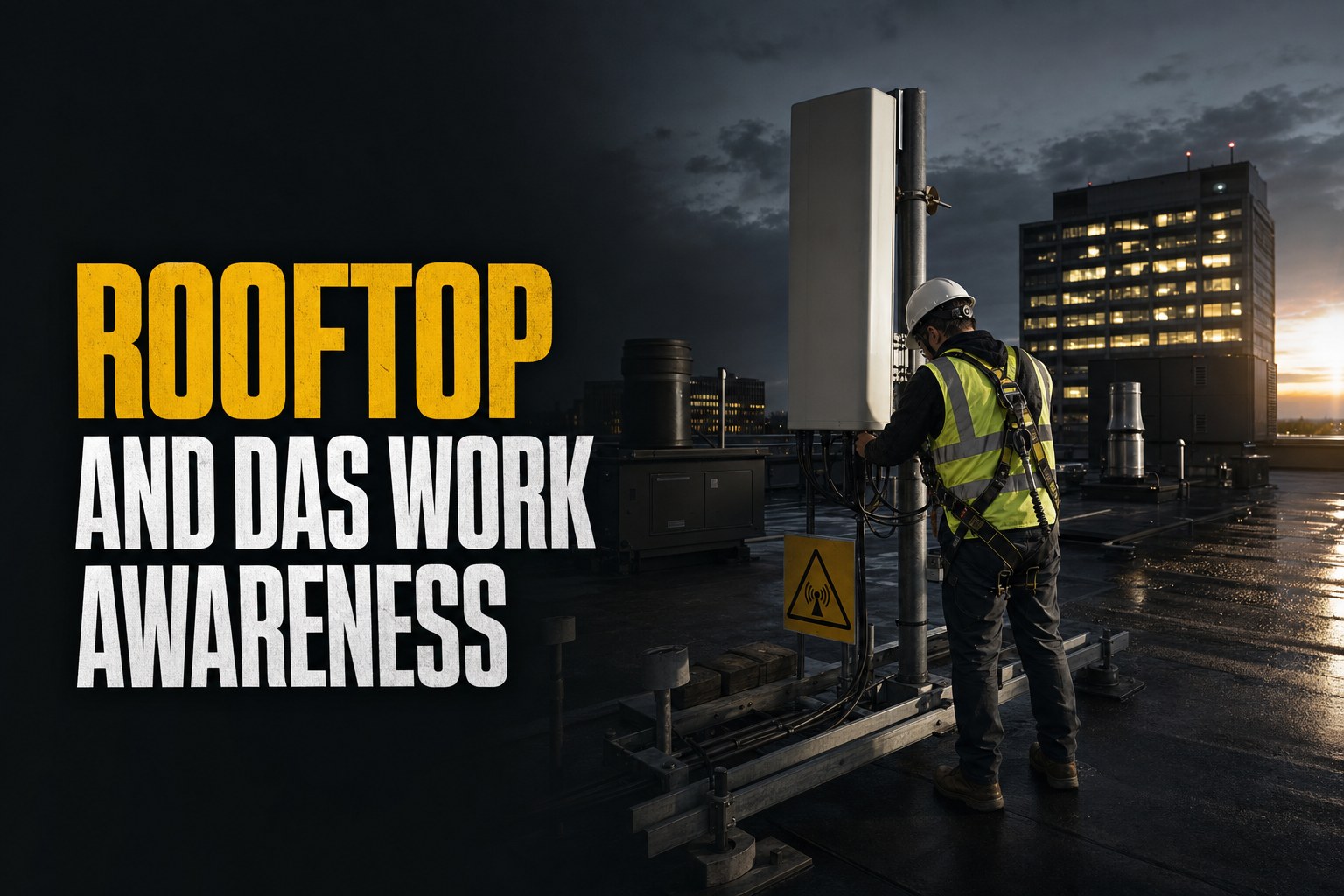
Recommended certification
Rooftop and DAS Work Awareness
$69 · ~2.5h online · certificate issued same day · valid 2 years
Also read: RF Safety: State's Highest Court Affirms FCC Authority Over Local Bans · Detroit Cell Site Battle: Why Clear Easements Matter for Tower Crews
What a DAS Technician Actually Deals With
- Working above people — ceiling-mounted antennas and cable runs over occupied space change how a crew plans overhead work and controls what's below it, even when the work itself is routine.
- Building systems that aren't yours — fire alarm conduit, sprinkler lines, HVAC ductwork and electrical panels are often inches from where DAS cabling needs to run, and damaging any of them is a liability problem on top of a safety one.
- RF in close quarters — indoor antennas operate in confined, reflective spaces (hallways, stairwells, parking structures) where signal behaves differently than it does in open air around a tower.
- The building is live — unlike a tower that's taken out of service for maintenance, most DAS and small cell work happens while the building keeps operating normally around the crew.
What the Course Covers
BuildRight's Rooftop and DAS Work Awareness course ($69, about 2.5 hours) builds the full picture: getting access and permission on a roof or inside a building you don't own, fall hazards that don't look like tower hazards, RF at head height and the controls that actually work for it, and a dedicated module on working DAS and small cell equipment inside occupied, live buildings. It ends with a final test and a certificate of completion valid 24 months.
Crews doing both tower and in-building work should pair it with RF awareness and safety for the broader RF standard, and can check exposure patterns with the free RF antenna zones tool before planning a day's work near a live antenna.
Frequently Asked Questions
What does DAS stand for?
Distributed Antenna System — a network of smaller antennas spread through a building or venue and connected to a shared signal source, used to extend wireless coverage where a single tower can't reach effectively.
Is DAS the same as a small cell?
They're related but not identical. DAS commonly refers to in-building or venue systems; small cell usually refers to standalone outdoor units on poles or rooftops. Both are distributed coverage solutions, just deployed differently.
Why can't a regular cell tower cover the inside of a building?
Steel, concrete and low-E glass block and reflect RF signal, which is why buildings with strong outdoor coverage can still have dead zones indoors. DAS solves this by placing antennas inside the structure instead of relying on signal penetrating from outside.
Is RF exposure different for DAS technicians than for tower climbers?
The underlying exposure limits are the same, but the practical exposure pattern differs — DAS antennas are often at head height in confined indoor spaces, while tower-mounted antennas are usually well above anyone on the ground.
Do DAS technicians need fall protection training?
Yes, for rooftop and elevated indoor work (catwalks, mezzanines, ladder access to ceiling spaces) the same 6-foot OSHA trigger applies as anywhere else. A rooftop-and-DAS-specific course covers both the fall hazards and the access/RF considerations unique to that environment.
Who typically installs and maintains DAS equipment?
It varies by project — sometimes the same telecom crews who build macro tower sites, sometimes a specialized in-building wireless contractor working directly for the venue or carrier. Either way, the crew needs the access, fall protection and RF awareness this course covers, since the work environment is different enough from tower work to need its own orientation.
