Under 29 CFR 1910.157, portable fire extinguishers need a monthly visual inspection, a more thorough annual maintenance inspection, and periodic hydrostatic testing on a longer cycle (typically every 5 or 12 years depending on the extinguisher type). These are three separate, overlapping requirements — not one annual check — and missing any one of them is a common finding when a site gets audited.
Most crews know "fire extinguishers get checked once a year" and stop there, which covers the annual maintenance inspection but misses the monthly visual check entirely — the one most likely to catch a problem (low pressure, physical damage, blocked access) before it matters.
The Three Checks, Three Clocks
Monthly: the visual check
A quick visual inspection — gauge in the operable range, pin and tamper seal intact, no visible damage, nothing blocking access to the unit — done and documented every month. This is the fastest check and the one that catches problems between annual inspections.
Annual: the maintenance inspection
A more thorough examination, often including internal examination for certain types, verifying the extinguishing agent and expellant are still effective, and checking mechanical parts. This is typically done by someone trained specifically for extinguisher maintenance, not just a visual glance.
Periodic: hydrostatic testing
Pressure-testing the cylinder itself to verify it can still safely hold pressure — required on a longer cycle that depends on the extinguisher type and construction. This catches degradation in the cylinder itself that neither the monthly nor annual check is designed to find.
Recommended certification
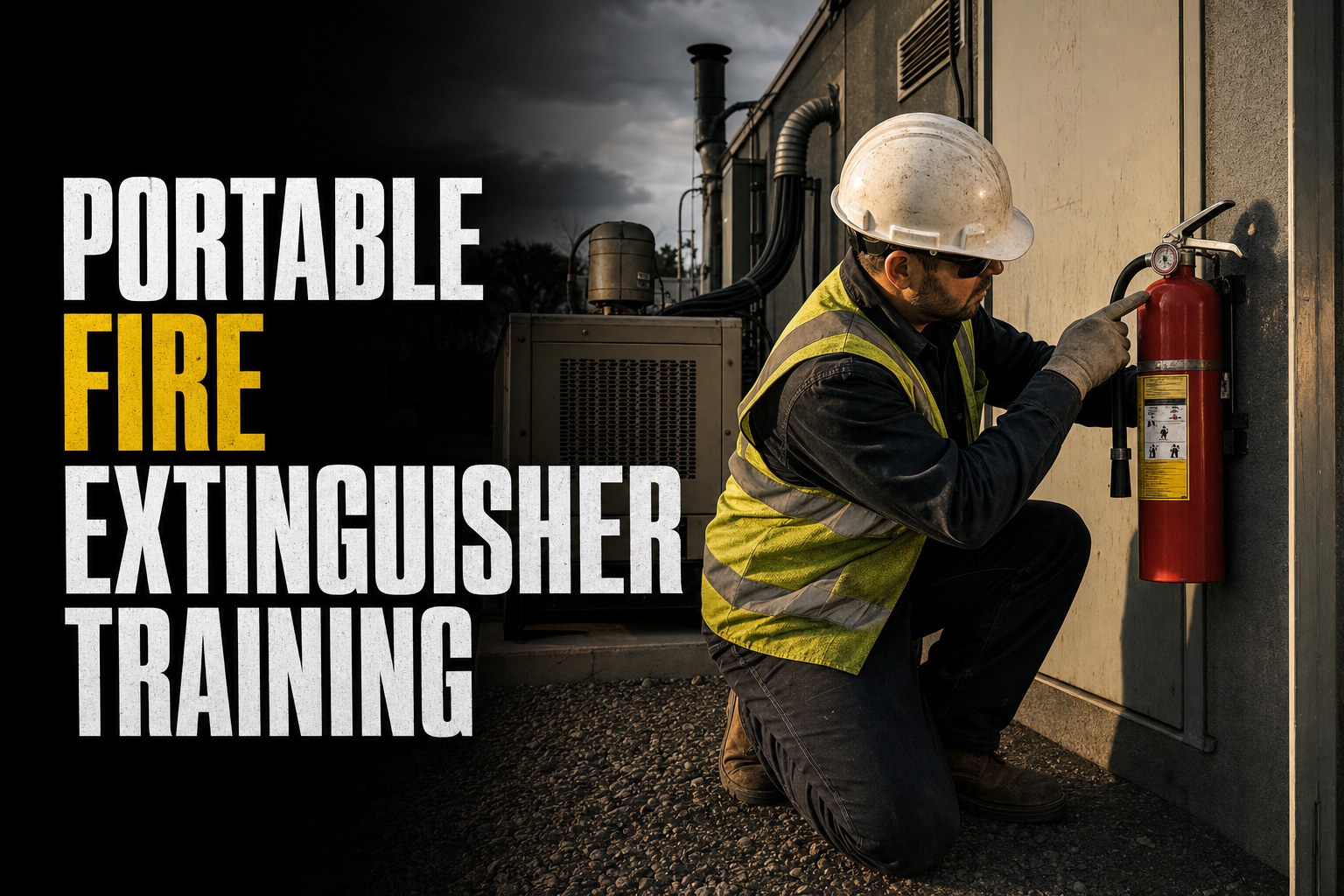
Portable Fire Extinguisher Training
$35 · ~1h online · certificate issued same day · valid 1 year
Also read: Breland Homes Faces $115,855 OSHA Penalties After Fatal Trench · Preventing Trench Fatalities: Key Takeaways from NUCA's Safety Month
The Fire Classes, and Why the Class Picks the Extinguisher
Fire is classified A through K based on fuel type — ordinary combustibles (A), flammable liquids (B), energized electrical equipment (C), combustible metals (D), and cooking oils and fats (K) — and the wrong extinguisher on the wrong class can make a fire worse, not better. Using a water-based extinguisher on an energized electrical fire, for example, creates a shock hazard on top of the fire itself. Reading the label and knowing what's actually in the room (generators, battery rooms, hot work) matters more than grabbing the nearest extinguisher.
Fight or Evacuate
Not every small fire is one you should fight. The decision to use an extinguisher versus evacuate depends on fire size, whether an exit path is still clear, whether the right extinguisher for that fire class is actually at hand, and whether anyone's been trained on PASS technique (Pull, Aim, Squeeze, Sweep) — a trained person with the wrong extinguisher, or an untrained person with the right one, both end up in the wrong outcome.
Telecom Site-Specific Hazards
Shelters, generators, and battery or lithium rooms each carry their own fire risk profile that a generic office fire safety talk doesn't cover — a battery room fire, for instance, behaves very differently than a Class A fire in an office, and hot work (welding, cutting) introduces an ignition source that needs its own fire watch procedure separate from the extinguisher question entirely.
What the Course Covers
BuildRight's Portable Fire Extinguisher Training course ($35, about 1 hour) is a short, practical course covering the fire tetrahedron and how an extinguisher actually puts a fire out, the five fire classes and why the class determines the right extinguisher, extinguisher types and PASS technique, the fight-or-evacuate decision, site-specific notes for shelters, generators, battery/lithium rooms and hot work, and the three-check inspection schedule under 1910.157. It finishes with a final test and a certificate of completion, valid 12 months.
This course is currently in final review before publication and isn't open for enrollment yet. It complements dropped objects prevention and other short-form safety courses crews use to round out a site's documented training program.
Frequently Asked Questions
How often does OSHA require fire extinguishers to be inspected?
Three separate schedules apply: a monthly visual inspection, a more thorough annual maintenance inspection, and periodic hydrostatic testing (typically every 5 or 12 years depending on type) under 29 CFR 1910.157.
What's checked during the monthly visual inspection?
Gauge pressure in the operable range, intact pin and tamper seal, no visible physical damage, and clear access to the unit — a quick check meant to catch problems between the more thorough annual inspections.
Can I use any fire extinguisher on any type of fire?
No. Extinguishers are rated by fire class, and using the wrong type can make things worse — a water-based extinguisher on an energized electrical fire creates a shock hazard, for example. The label tells you which classes it's rated for.
What does PASS stand for?
Pull (the pin), Aim (at the base of the fire), Squeeze (the handle), Sweep (side to side) — the standard technique for operating a portable fire extinguisher.
Does this course replace my site's own fire extinguisher inspection program?
No. It trains individuals on fire behavior, extinguisher use and the inspection schedule the standard requires — your site still needs its own documented inspection process and records showing the required checks actually happened.

