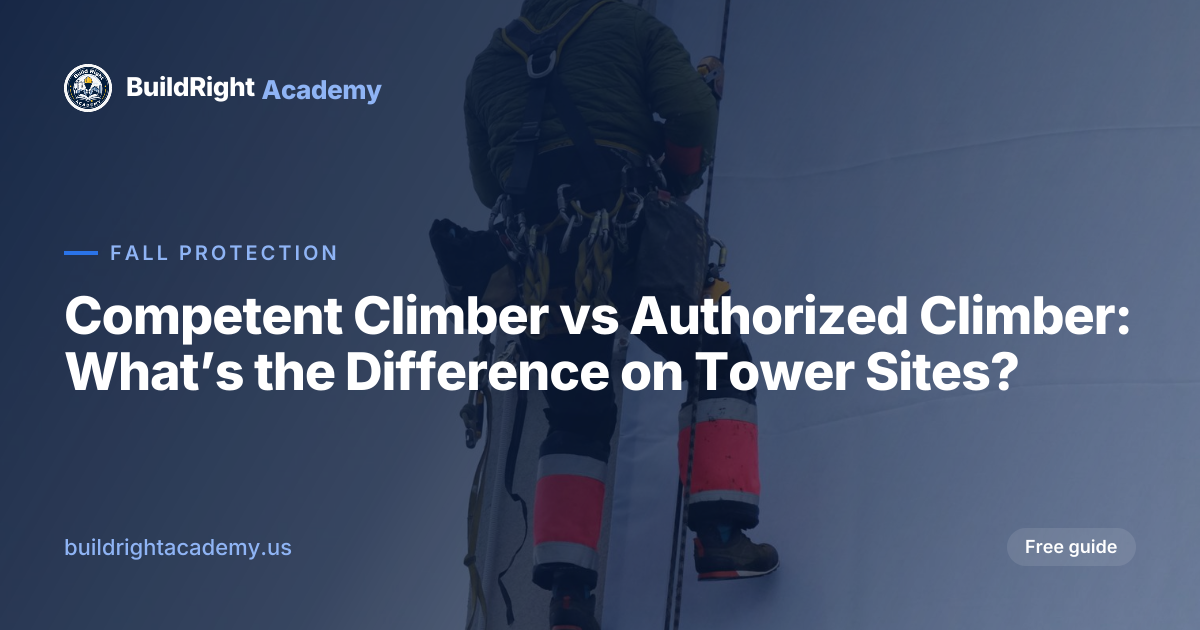
Tower job postings ask for "competent climbers." Site checklists count "authorized climbers." Crews use both words loosely — but on an audit, the difference decides whether your crew ratio passes. The industry convention (rooted in ANSI/ASSP A10.48 language and OSHA's competent-person concept) breaks down like this.
Authorized climber: allowed to climb
An authorized climber is trained and permitted to climb under supervision: fall protection systems, 100 % tie-off, equipment inspection basics, climbing techniques, and self-rescue awareness. Authorized climbers do the work — but they work under the umbrella of someone with the next level of judgment.
Competent climber: allowed to decide
A competent climber carries the OSHA meaning of "competent": able to identify hazards and authorized to correct them. Competent climbers plan the climb, inspect and approve equipment, supervise authorized climbers, and own rescue readiness on site. When something on the tower does not match the plan, the competent climber is the one qualified to stop and change it.
The same split repeats for rigging: rigger versus competent rigger, and carrier checklists ask for the competent level on both — see the ratios in the AT&T requirements breakdown.
Recommended certification
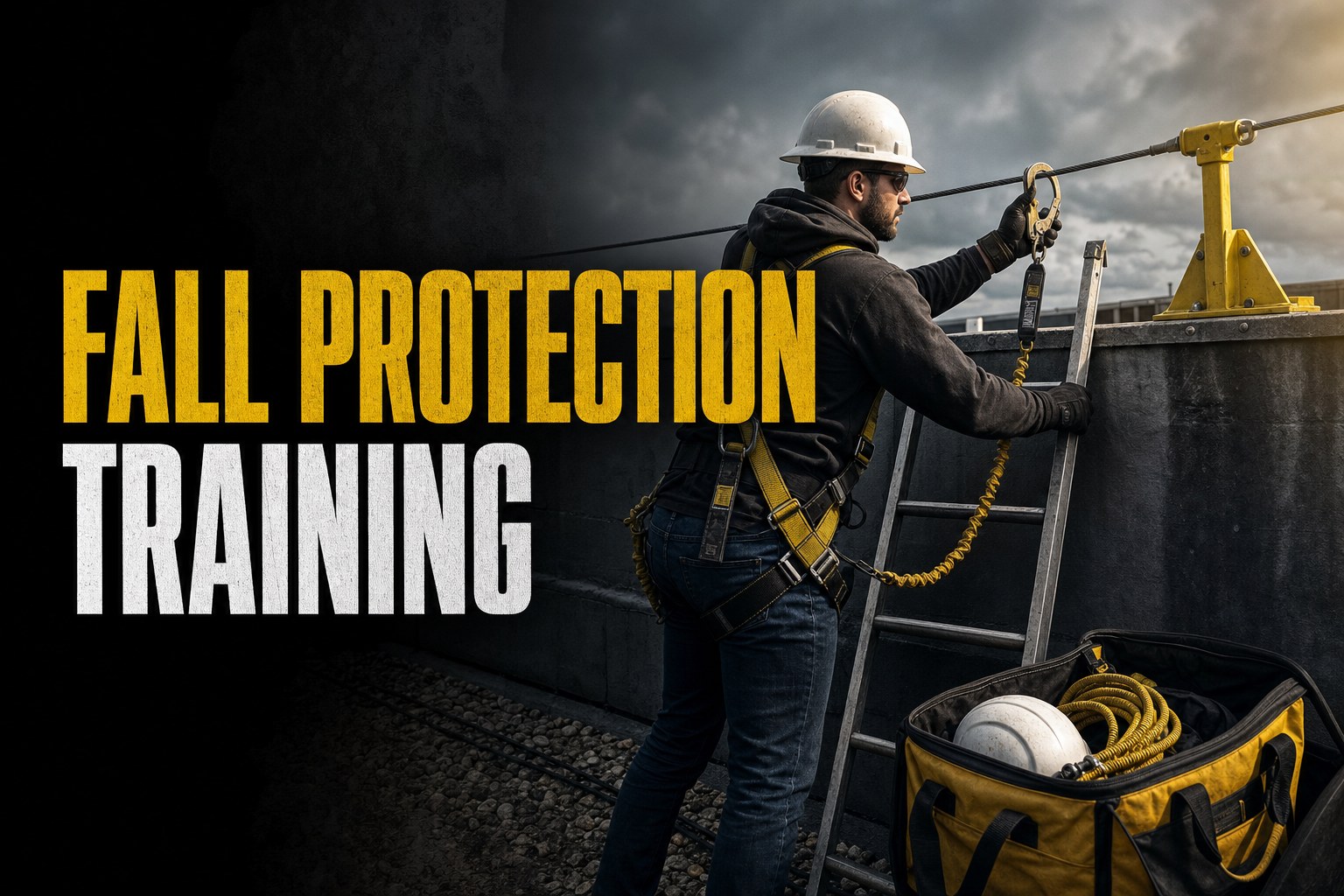
Fall Protection Training
$30 · ~30 min online · certificate issued same day · valid 2 years
Also read: Tower Climber Certification Path: From Authorized to Foreman · Capstan Hoist Certification Requirements: What Tower Crews Actually Need
The 50 % rule
Carrier and turf checklists typically require at least half the crew at competent climber level, and the same for competent riggers on rigging scopes. The logic is coverage: any pair working a leg includes someone with decision authority. And as with everything ratio-based, staffing to the exact minimum is how crews get turned away the day one person is out.
Training paths
- Authorized level is knowledge-heavy: fall protection theory, equipment, tie-off discipline — the scope our online fall protection course covers with a same-day verifiable certificate.
- Competent level adds hands-on evaluation: demonstrated rescue capability and documented field experience under a qualified trainer. The knowledge portion can be done online; the practical evaluation cannot — plan an in-person day for it.
Practical takeaway for crew leads
Map your roster: everyone climbing needs authorized-level training as the floor; half or more need the competent designation with the practical sign-off current. Track both on one dashboard with expiry alerts, and the climber lines on any carrier checklist — T-Mobile, AT&T, or Verizon — stop being a scramble.