If you have compared job postings or carrier requirements, you have seen the terms used interchangeably: RF awareness, RF safety, RF certified. The confusion is real because the industry never standardized the naming — but the practical distinction is simple.
RF awareness: the universal baseline
RF awareness is the entry level: understanding that transmitting antennas create exposure zones, recognizing signage and barriers, knowing the difference between general population and occupational limits, and knowing what to do when a personal RF monitor alarms.
This is the level every single person on a telecom site needs — climbers, ground hands, even the delivery driver who walks past the sector. On carrier sites, RF awareness for 100 % of the crew is the single most consistently enforced certificate in the industry — it tops the checklists for AT&T, T-Mobile and Verizon alike. No RF card, no gate.
RF safety (worker level): working inside the zones
What most crews call RF safety training builds on awareness with the working knowledge climbers actually use: reading site RF signage against the sector layout, lockout/power-down coordination with the carrier's NOC, working around live sectors, using time-averaging, and responding to overexposure. If your people work at height on active sites, this is the level their training should match — and it is what our RF hazard communication course covers, with a verifiable same-day certificate.
RF safety officer / competent person: the site-level role
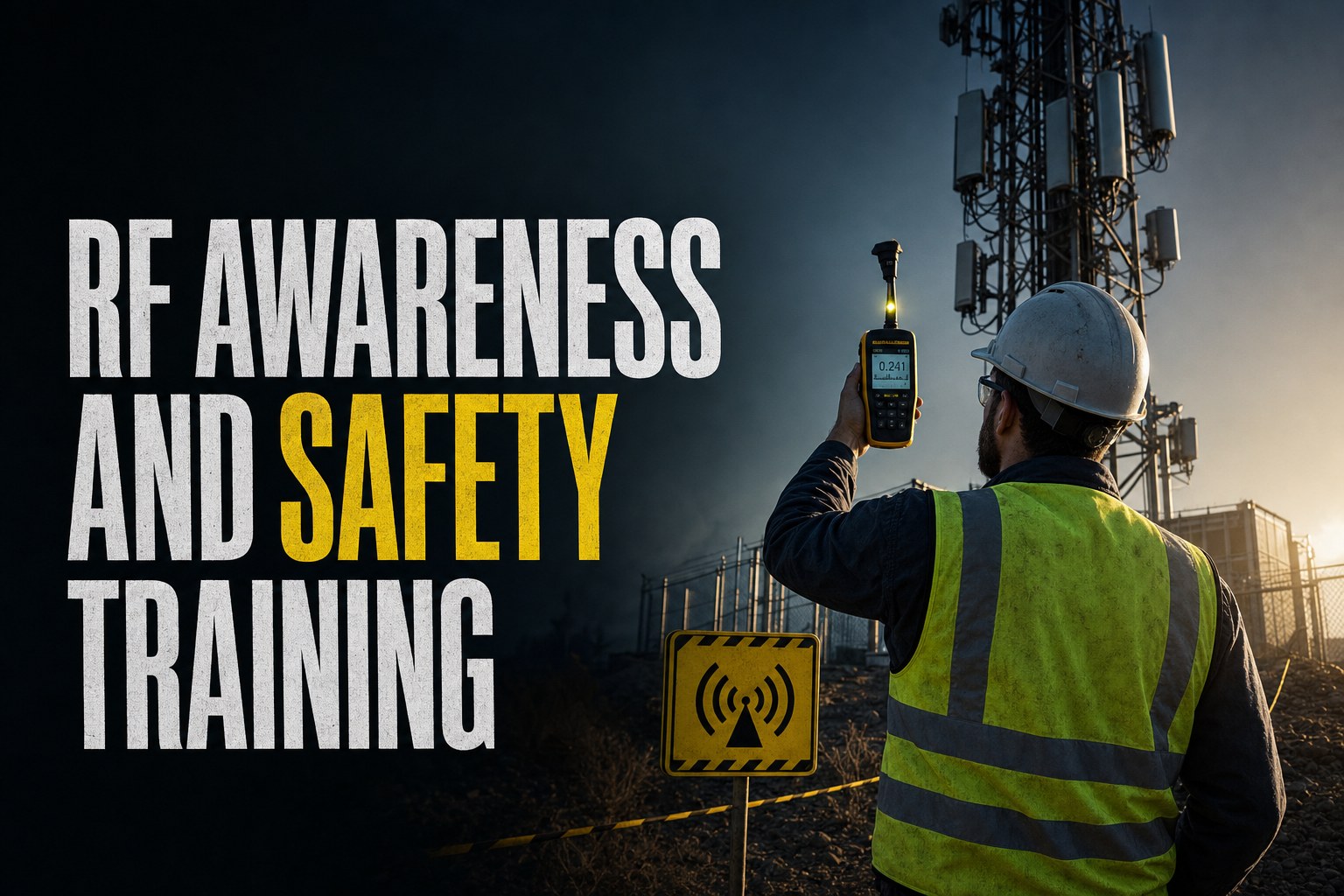
Recommended certification
RF Awareness & Safety Training
$49 · ~1h online · certificate issued same day · valid 2 years
Also read: Competent Climber vs Authorized Climber: What’s the Difference on Tower Sites? · Capstan Hoist Certification Requirements: What Tower Crews Actually Need
Above both sits the RF competent person — the one who does site RF assessments, sets controls for the crew, and owns the power-down requests. That is a role designation with deeper training, typically one person per crew or per company, not a crew-wide requirement.
So which do you need?
- Everyone on site: RF awareness at minimum — this is non-negotiable on carrier sites.
- Anyone working at height on active sites: worker-level RF safety (awareness content plus exposure control practice).
- One person per crew: enough depth to read site assessments and coordinate power-downs.
What the gate check actually looks for
Auditors rarely parse the difference in course names. They look for: a certificate with "RF" in the title from a verifiable provider, a current date, and — increasingly — a calibrated RF monitor physically on the crew. An expired card or an uncalibrated monitor are both documented turn-aways, and they read the same to the GC.
One practical warning
Whatever the course is called, check that it covers occupational exposure limits and monitor response — a generic EMF overview aimed at office workers will not survive a carrier audit even if the title says "RF safety". Train to the work you actually do, keep the card current, and the RF line on the gate checklist becomes the easiest one to pass.